PC Life

That’s, I guess, some of your beeswax

“How much money do you make?”

“What’s your religion?”

“What are you?”

Are these questions between intimate lovers, or between you and the man who just sat down next to you on the bus? The answer: Well, it depends where you are.

I get into these kinds of conversations all the time. People always seem to ask the exact same questions in the exact same order. It’s not that my Kyrgyz is great but that I’m fantastic at repeating a set of syllabic mumblings over and over again. I can even feel some of these conversations coming on and just hit the auto-pilot on my tongue and let it do the work. It usually begins when I’m standing outside with a man I’ve just met waiting for something. His face gets this look, he turns and spits, and then opens his mouth…

Here it comes.

Local: Are you married?

I friggin’ knew it.

Me: No.

Local: When are you getting married?

Me: I don’t have a girlfriend.

And now for a blank stare and repeating of the question.

Local: … no, I mean, when are you getting married?

(In Kyrgyzstan, men often pick a wedding day first and a bride second.)

Me: Only God knows. Cue the laughter.

Local: (Laughs) Maybe you will take one of our girls back to America? (More smiles)

Me: (Mouths Maybe you will take one of our girls back to America at the exact same time as Local is speaking) We’ll see.


Sometimes I mess with the answers, just to shake the question fatigue.


Local: America is wonderful, yes? Much better than Kyrgyzstan…

Me: No, they’re just different. I like Kyrgyzstan.

Local: But, America, life is so much better there, right?

Me: It depends. Life in Kyrgyzstan can be great.

Local: Ah, but American life must be wonderful.

Me: … Actually, all the streets in America are made of gold. If you get hungry, you can take a shovel and dig up a little bit of the road and go buy yourself a hamburger.

Local: …

Me: …

Local: … (lights cigarette)

I feel like I’m reliving the movie Groundhog Day whenever I have these conversations. They go exactly the same every time, down to the punctuation, and I’m now rolling somewhere in the 300’s of times I’ve been through these.

And it’s not just because I’m a foreigner that I get asked personal questions. My Kyrgyz friends say they too are often asked some of these, and I’ve been on many a mini-bus ride where the young men are asked by the older women if they are married, if yes, how many children they have, etc. It’s just kind of a Kyrgyz thing. Since there are few Kyrgyz people in a small country I suppose it’s a way of figuring out how you know each other, since fun connections do pop up in these conversations almost as a rule. Family relationships and belonging are important here.
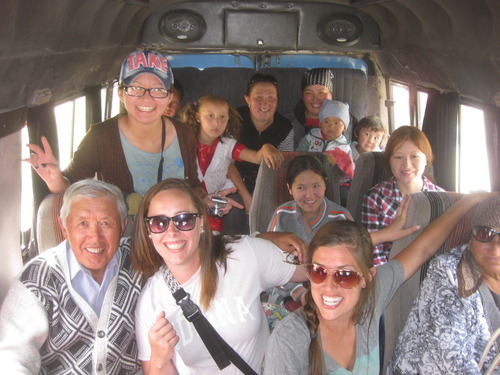
image On the upside, a mini-bus is a great place to make new friends

In America it’s the weather. We’re constantly making pointless observations to strangers about the activity in the sky—or not even the current activity but the potential of it to act a certain way at an unforeseen point in the future.


“Looks like rain.”

“Yep. Glad I have an umbrella.”

“Yep.”


My grandpa is one such exemplary American, always commenting on his thermometer in his mini-van if it gains or loses even a degree. I asked him why people talk about the weather so much. He said, “It’s the one thing we all have in common.”

America, it is said, is the great salad bowl and it can often be difficult to find commonalities between pepper flakes and a slice of tomato. But here in the Peace Corps in Kyrgyzstan, personal questions are the common ground.
Doubt and Survival in the Peace Corps

Peace Corps service is something that can rock you to the very core of your being and shake your innards until they’re so scrambled you can’t tell your dreams from your nightmares. Why did you even come here in the first place? What was it that told you it was a good idea to leave everything to do this? Is the world any better off for you having been here?

You wanted to do this so badly for so many years and now all you want to do is go home. This is about the point in your thought process when you find yourself at the bottom of that downward spiral called doubt.

I’m not talking about doubt’s healthier cousin, skepticism. A healthy dose of skepticism can be good for you. You should question your motives, probe your thoughts, consider your feelings and weigh the pros and cons when making any important decision. Here I’m talking deep-seeded, soul-searching gut-wrenching, ulcer-inducing doubt. Why am I here? What am I doing? Is any of it worth it? Is this where I want to continue to give two years of my life?

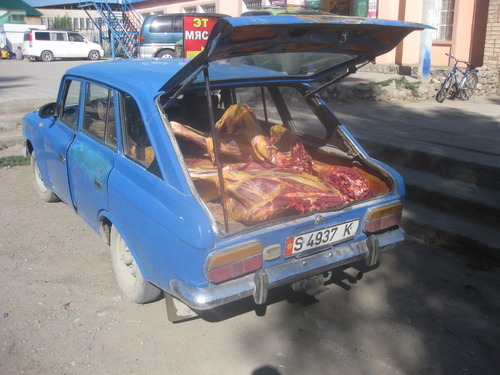
imageI’m suddenly doubting every past decision to eat meat
At no other point in my life have I wavered in so much doubt. I’ve agonized over staying or leaving and even talked to an Army recruiter on the phone a couple of times the first autumn I was here, willing to scratch my name off the line to sign it on another, even longer contract.

It comes and it goes like tides pulled by a giant orb above our heads, almost as sure as the moon herself. Now, fortunately, she’s sailing in another sky and with any luck this season of survival will last for awhile. Yet, having been here for almost two years, I have started to realize a pattern of strategies for riding out the high tide of doubt when it inevitably comes.

Stop asking so many questions

I never used to ask myself, “Am I doing enough?” As soon as that question crept into the back of my mind, things started to go downhill. At the end of any honest search to this question lies a resounding, “NO.” You could always do more, always reach more people, always start one more project. There is way more that needs to be done within a community and country than you can possibly do. Asking yourself this question is guaranteed to result in a crushing, soul-searching session sooner or later.

And if you start questioning the work you are able to accomplish, you will soon find yourself doubting the good when weighed against the sheer hopelessness of making a dent in the world’s problems. As long as you’re working and connecting with people, you’re doing some good here. Leave it at that.

Do what you like to do, and keep doing it. One of my volunteer friends has a great strategy of simply doing a level of work that he knows he can repeat again the next day, and the next, indefinitely. This way he knows he won’t burn out, but will continue to thrive in enjoyable, meaningful work.

Take care of yourself

You are going to be miserable help to everyone if you are miserable yourself. There’s a reason flight attendants remind you to put your own oxygen mask on before helping anyone else. You’re not very useful if you’re dead.

Take the time to eat right, exercise and drink water. One of the biggest boosts to motivation is simply drinking more water. Water helps brain function, helps you get more rest while you’re asleep and keeps you alert and in a better mood throughout the day. Peace Corps issues you a filter—make good use of it.

Don’t give up on your hobbies just because you’re in a different place. Continue to do them or share them with others if you want.

Seek to strengthen your relationship with God. Your need for Him will likely be felt more acutely here than anywhere else.

Relax and breathe. Seriously. You’ll forget to do this at multiple points of your service.

Find humor in just about everything

You are going to experience some tough things, and there is a time for being somber and mourning with those who mourn. But even people going through their darkest days don’t want to wallow continuously. There will be plenty to get angry at or upset about and those are appropriate reactions to injustice and suffering. But don’t stay there. You have to balance those emotions with the little quips and smiles because brooding is a sure onramp to the downward spiral highway of doubt with no exit sign in sight. If you’re here to make things better, enjoy doing it.

And if you need to go home, go home

There’s nothing worse than after carefully weighing your options, you choose to suffer. The world’s not going anywhere. There will be more volunteers, more projects and more opportunities. As much as it is a hit to the ego, at the end of the day we Peace Corps Volunteers are just one small slice of what’s going on in our communities and in the lives of our friends, co-workers, students and neighbors. They’re going to be fine, and so are you. You can continue to keep in touch or even come back sometime, if you like.

Why I still put up with the doubt

Having said that, I’m glad I’m working through the doubt and am continuing to decide to stay. If I hadn’t I would never have met Maksat, a great friend, business partner and inspiration to me and the future of Kyrgyzstan. I would never have met my best friend Nazgul or experienced first hand the struggles of those living in a small village, out of the reach of big city resources and opportunities. I also never would have gotten to share my own English teaching skills with as many teachers nor had the time to be an influence on other people’s lives. There are so many things you can’t learn or do unless you have the backing of months or years.

For me, I think of it like being married. When I do get married, I’m not going to just wake up one day, doubt my decision and take off. The doubts will be there and maybe for a long time. But you don’t get married so you can see how it goes, playing it day by day. You get married because you’ve decided, “I’ll love you forever.” I often have doubts about being in the Peace Corps and being in Kyrgyzstan. But I also know that I’ll love them forever. And that’s why I’m still here.

imageThis one’s going to last

People are the same everywhere. They’re just different.

There was a knock at the door.

Bang bang bang

I decided to ignore it. I had come home from school not feeling very well and so had slipped into bed for a couple hours of afternoon rest. The door was locked to keep any neighbors or friends from just wandering in as they occasionally do so I could have a couple uninterrupted hours.

There was another knock at the door, this time combined with callings of my name.

Bang bang bang “Lu-ter!” Bang bang bang. “Luuu-ter!”

It was my landlord, who lives in the adjacent house on the property.

“Ignore him,” I thought naively, “That’s the best way to make him go away.” Unfortunately, it only served as a challenge.

There were several yanks on the door, the loose deadbolt rattling in its locked position. More knocking. Then the phone started to ring. I let it ring through. It rang again. I let it ring through again. It rang twice more before there was a reprieve in ringing and knocking.

“Thank God. He’s finally learned I don’t want to go to the door.” But it was just the eye of the storm. Moments later he returned with his son who, while my landlord began a barrage of knocks on the front door, walked around the side of my house and launched an attack on the window. It was too much. I waved my white flag.

“WHAT?!?” I screamed from my bed.

“Lu-ter,” my landlord said in a cheery voice, “Come drink tea!”

I was furious.

“Is my house on fire?” I yelled back.

“What?”

“Is. My. House. On. Fire?”

“…No…”

“Then leave me the hell alone and stop knocking!”

“Lu-ter – just come open the door.”

“No! I will not open the door!”

“Why?”

“I want to rest! Why is that so difficult to understand?”

“Ok, ok, just asking…” He walked away.

By this point I was so irritated I couldn’t get to sleep. Why didn’t he understand that when nobody answers the door, it means they don’t want to and aren’t going to? Doesn’t he know how rude it is to knock more than 2 or 3 times?

Doesn’t Luther know how rude it is not to answer the door when someone is knocking?

I didn’t get why my landlord wouldn’t stop knocking. My landlord didn’t get why I wouldn’t answer.

The difficulties in living and working cross-culturally are in our expectations. Growing up in one particular culture, we are conditioned to expect certain behaviors from people in specific situations. And when people don’t behave as we expect, we get frustrated, annoyed, confused or upset.

I came in knowing there would be cultural differences, but I didn’t think about how difficult it was going to be to draw the line between what makes us all the same as humans and what separates us by our cultural habits. It’s not so easy to know if your landlord is simply knocking because it’s the culturally friendly thing to do, or if he is inherently rude. Just what is it about human beings that makes us the same? What are the universal truths about our species? What are the behaviors we should expect out of any person, anywhere?”

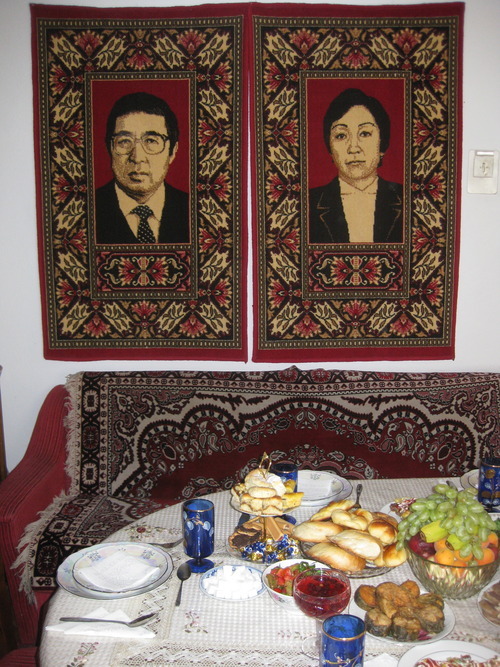
imageEveryone wants to be immortalized…in carpet.

I believe it comes down to God’s truths laid out in the Bible. God’s truths cross all cultures and all of history, laying out the expectation that we are to respond in service and honor and worship of Him by doing things like pursuing justice, taking care of widows and orphans, being honest and showing one another grace.

But just how this plays out in our behaviors isn’t always clear. Being raised in one environment makes it very difficult to separate out truth from behavior. Kyrgyz and Americans are both hospitable, but a Kyrgyz person will show this by force serving you multiple cups of tea beyond your bursting point while Americans will tell you to “help yourself.” Americans and Kyrgyz will want you to eat well so Americans will feed you a portion from each section of the food pyramid while a Kyrgyz person will watch in eager expectation as you try to swallow the lump of pure-fat-sheep-butt in a breadless sheep-liver sandwich. Americans and Kyrgyz respect the elder generation and so Americans will create opportunities for elders to continue to take control of their own lives while grown Kyrgyz children will make space in their already small homes to provide for all the needs of their elderly parents.

Our intentions are often exactly the same because as humans we’re following one, collective gut in how we should treat people. But, while what our gut tells us may be the same, what our gut tells us to do can be oh, so different.

Wash your hands

When I was little and would use the facilities so to speak, I would wash my hands with soap if it was #2 or simply rinse them a bit for #1. Those were the standard operating procedures for Little Luth. I never really thought about the science behind why hands needed to be clean or how one methodically went about ensuring they were so.

Now my hygiene habits weren’t particularly worse than anyone else around me on a typical day back in the states, but they probably weren’t as clinically sterile as they could have been. How often did I rub my hands on my pants and then take a bite of a sandwich or open the door of a Chipotle before enjoying a burrito? (Mmm…burrito…wait, what are we talking about again? Oh yes.)

In the past year and a half my hand-washing habits had gotten worse. Even now I’m sitting in my house, a head cold and nervous it might be hep A since a bout has been going around my village lately picking off one student after another. The opportunities for hand-washing are greatly decreased here due to lack of running water and hand-washing stations posted around plus the cultural habit of shaking every man’s hand no matter how soon you need to be eating something. That’s one more incentive to ‘get it right’ when you do have the chance.

A health volunteer friend of mine, Tori, came out to my village earlier this winter to do a couple of health lessons for my students, one being hand-washing for the adorable second and third graders. Or at least I considered them to be adorable until my counterpart decided it was a good idea to stuff 90 of them into a classroom for the lesson. It’s easy to have a less gracious view of 90 little snots all talking at once and shoving each other to get as close as possible to the front of the room.

imageSaving the world, one pair of hands at a time

I listened to her lesson in between breaking up fights and rerouting attention and realized, “Wow. I’m learning something.” There’s a kind of technique to hand-washing that goes beyond just letting water run over your hands. I was especially impressed by the double fingernail scrub (picture a row of choir kids singing with their hands clasped in front of them) and the thumb wash (picture milking a cow). I was going to be so much healthier from her on out, and a lot more happy each time I washed my hands singing the full ABCs before I walked away.

The neatest thing about the training though was how memorable it was. To this day I still wash my hands differently because of that training. And this is what any of our trainings focus on: behavior change. Just how you can get someone to change risky behavior for healthier behavior is a tricky task set before volunteers on a daily basis.

So thank you Tori! My hands have never felt so clean, nor have I had so much fun washing!

Health volunteers are doing amazing things and are making a big difference in communities around the world. Remember to thank a Health Peace Corps Volunteer the next time you see one!

The government loves acronyms

PCV1:  Dude, have you checked out the PCTs?

PCV2:  Yeah man, that one SOCD? I mean, SCD now – Rockin’.

PCV1:  Which one?

PCV2:  The one with the crazy LCF.

PCV1:  Eh, the SCD’s ok – the HE’s better.

PCV2:  Too bad we’re not PCVTs…

PCV1:  Hey, did you get your SPA?

PCV2:  No. Stupid SPA rep’s got it out for me.

PCV1:  You should just do a PCPP – a lot easier, you know.

PCV2:  I might throw it at VAST and see what happens. Oh! Did you hear who ET’d?

PCV1:  No!

PCV2:  That K-20 who didn’t send BAS to the DO and the SSC flipped out. The CD started AS but she didn’t want to deal.

PCV1:  VAC should say something.

PCV2:  You going to see your PM at PST?

PCV1:  Naw, I still haven’t done the VRF… But I might have to see the PCMC for some Cipro. I popped ‘em all last week.

PCV2:  Rough, man.

Was this a Peace Corps conversation? Or secret code in some shadier dealing?

If you’re in the application process to become a volunteer, you’ve probably already run into some of these abbreviations. Many of the Peace Corps publications include a list of acronyms or initialisms on the opening page so you’re not lost after the first sentence. There was even a special session during our Pre-Service Training explaining some of the more common ones. I was like, “If we have to spend all this time sorting out abbreviations, is shortening our phrases actually saving us any time?” The inevitable “huh?” that comes up in these conversations coupled with the explanation can end up taking several times longer than just saying the original phrase.

imageThis message is going in the T-R-A-S-H

And then there are the conversations that get sidetracked because no one really knows what the acronym stands for.

“Hey, the PCMO—”

“No, she’s the PCMC now.”

“What does that mean?”

“I don’t know…Peace Corps Manager of Care?”

“No dude, the M still means Medical. I think she’s a Choreographer or something.”

“That doesn’t even make any sense.”

So far in my volunteer service for the government I’ve learned enough acronyms to fill a pallet of alphabet soup. It wouldn’t surprise me in the least if I learned the government has a federal bureau of abbreviations. Or in their love language, the FBA.