Author: Luther

Should “small” languages be preserved?

Yesterday was National Kyrgyz Language Day and I couldn’t have felt more out of place. I had agreed over the weekend to show up for a recording for a show on foreigners who speak Kyrgyz and instead found myself on live television, sharing the stage with a host and 5 other Kyrgyz gentlemen—fathers of the Kyrgyz Republic.

I was the little kid brother to a 6th grader. A peon to the president. A proletariat to an aristocrat. I was a strange, thirty-year old foreigner in a purple checkered shirt and Adidas tennis shoes among congressmen, professors and those who have written Kyrgyz history with pens dipped in the sweat of their brows and the blood of their struggle. Let’s just say I felt…inadequate.

IMG_1290Public Teleradio Corporation (Коомдук Телерадиоберүү Корпорациясы)

Why I was on this show is beyond me. I was told there would be other foreigners there and that we would be briefed on simple questions like, “Why are you learning Kyrgyz? Is it hard? Do you like puppies? Here’s a piece of candy…” The host’s first question was something along the lines of, “Dear gentleman so-and-so, you were the one in congress who pushed for the recognition of the Kyrgyz language in the Soviet Republic of Kirgizia back in the late 1980s. Could you tell us a little about the history of that historic vote?”

We were told this would go on for an hour and now I was really nervous—how many questions was the host going to ask me? How was I going to understand the question, much less be able to put together a string of coherent thought cogently processed and well reflected given the diverse and nuanced point of views on the usage of the Kyrgyz language in today’s culture and society?

What ended up happening was the host asked me a question, I ignored it and then rattled off every piece of Kyrgyz that was anywhere near the front of my brain to tens of thousands of people tuned in to watch this talking head make a blunder on live, national television.

Basically I just talked about how I studied and learned Kyrgyz and gave some advice, but I also added that I thought both Kyrgyz and Russian are important for people to know. In some places, mainly small villages, students speak almost entirely in Kyrgyz and practice Russian very little. Then when they come up to the capital to attend colleges and universities, they really struggle because they don’t have a strong academic command of the Russian language. In order to function in the top tiers of Kyrgyz academia, business and society in general, you really need to know both.

That was about all I had time to say. I had been worried about the whole hour long thing, but luckily I was on stage with several senior gentlemen who also happened to be very opinionated and so that quickly ate up the time. (The first question above took over ten minutes to answer just by itself since we were receiving a minute-by-minute replay of the vote in congress from the distinguished gentleman on my right.)

IMG_1285I missed the memo on wearing a kalpak

The discussion never really got to anything truly controversial or interesting. Basically they just said Kyrgyz culture and mentality is best preserved through the language. That in order to best understand and preserve a culture, the language must first be preserved. Others added that since this was Kyrgyzstan, populated mainly by ethnically Kyrgyz people, the language should be the main operating language of the land.

I agree with this but thinking about it afterwards, I wish I had asked some questions like, “How do you ensure that everyone learns Kyrgyz, especially when Russian is already the operating language?” The world today is so interconnected that it makes little sense to huddle up with a small language almost no one outside of these borders understands. I’m all for preserving Kyrgyz and yes it is useful for those living here, but we can’t deny that Kyrgyzstan—like any nation in the world—is dependent upon relationships with surrounding countries near and far. If we are going to preserve Kyrgyz, let’s also push for fluency in Russian and English. English is the language of the world—you can go to China and speak English. You can go to Argentina and speak English. It’s a transferrable skill that offers immediate benefits in business, tourism, and education and the sciences, all areas that Kyrgyzstan needs so desperately to improve.

After what seemed like hours, the minute hand on the clock hit one revolution and the “live” light went dark. I was completely soaked on every limb of my body except for my mouth which felt like it had been lined with sandpaper and then filled with sand. I performed the perfunctory handshakes and cell phone pictures, received my little gift folder for being on the show and scooted out into the afternoon air.
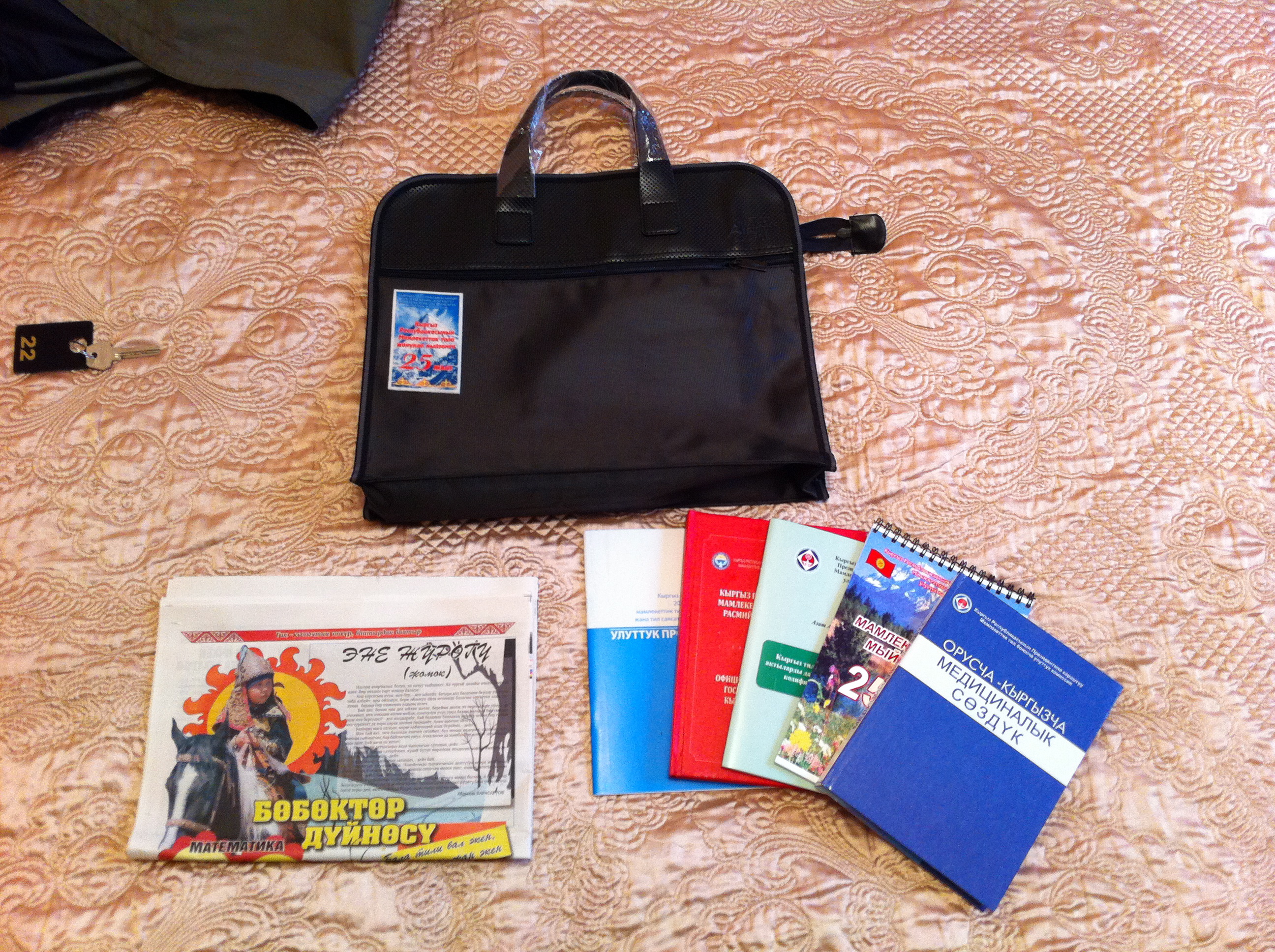
IMG_1292Gift package including a Russian-Kyrgyz medical dictionary

I may not have had the time or language to get into a deep discussion at the studio, but maybe we could chat here if you have some thoughts to add? How important is it to preserve languages spoken by very few people? Does it make sense to require all people in a nation to speak one mutual tongue? What direction is Kyrgyzstan going? And what part should the English language play here?
Discipline through Defeating Deception

This is the first installment in a seven-part series on being disciplined. We all would like to be able to think a little clearer, feel a little better and enjoy the things we need to do in life a little more. No matter where you are when it comes to being disciplined, these thoughts can help you better achieve your goals and continue along your path of being disciplined.

—–

What lies have you told yourself today?

Stop for a few minutes and think about it—in what ways today have you told yourself things that aren’t true?

Maybe this is a difficult exercise. The ways in which we lie to ourselves aren’t usually immediately apparent. In fact, you’ve probably gotten so good at lying that you are seeing these lies as truth.

This is the basis for “Misbelief Therapy” championed in the book Telling Yourself the Truth by William Backus and Marie Chapian. This form of therapy helps you identify the lies you tell yourself and to replace them with the truth. It’s an incredibly helpful book and I’ve gone through it four times in the last eight years.

Misbelief Therapy applies to all aspects of your life and particularly to your self worth as a person. If you struggle with this, I encourage you to get professional help! I’ve met with a few different psychologists and therapists over the course of my life and they’ve been so good at helping me get on the path to better thinking and better living.

Here we are going to look at how this therapy applies to being disciplined. Many other topics are addressed in Backus and Chapian’s book, and you can read at length there if you’re interested.

Lies lie in the absolutes

Let’s go back to thinking about identifying the lies we tell ourselves. Lies are easier to spot when you think about the superlatives you tell yourself:

  • “I’m never going to be able to finish this assignment.”
  • “I simply can’t get out of bed.”
  • “I’m never going to amount to anything.”
  • “My boss is going to kill me if I don’t show up on Saturday.”
  • “If I can’t finish this paper, it’s going to be the worst thing ever.”

These statements aren’t true. They can’t be. For most of them, you’ve already proved them lies again and again. Yet you keep telling them to yourself and worse, continue to believe them.

The first thing you need to do on the path to discipline is to defeat deception. Try this for the next week: Listen for your self talk. Each time you catch yourself using one of these absolute terms, write the entire comment down. Don’t worry about correcting it yet. Before you start arguing against the lies, you need to know what you’re up against.

After a week of this, look over your list. What kinds of absolutes are you telling yourself? Are you often using the word “never?” Or maybe they’re things like, “I would just die if…”

Following the trail of lies

The next step is to think about each of these statements, one by one. Let’s look at one of the statements above—“I simply can’t get out of bed.”

Have you gotten out of bed before? How many times have you successfully gotten out of bed in your life? Are you going to get out of bed in the future? After all, you’ll eventually need to go to the bathroom. It’s simply not true that can’t get out of bed.

“But, I’ll skip work, that’s the worst!” You might answer. “It’s not about getting out of bed, but about what I’m trying to avoid!”

What are you telling yourself about what you’re trying to avoid? Is skipping work “the worst?” Is it really the worst thing you can imagine happening to a person in his or her lifetime?

“If I don’t finish the project today, my boss is going to kill me!”

Is your boss really going to kill you? Do you think he’s waiting at the office, standing in front of his collection of torture devices, trying to decide between the two-handed sword or the piano wire?

And maybe he will really be angry. Maybe he’ll yell and swear. Maybe he’ll fire you. But he’s not going to kill you.

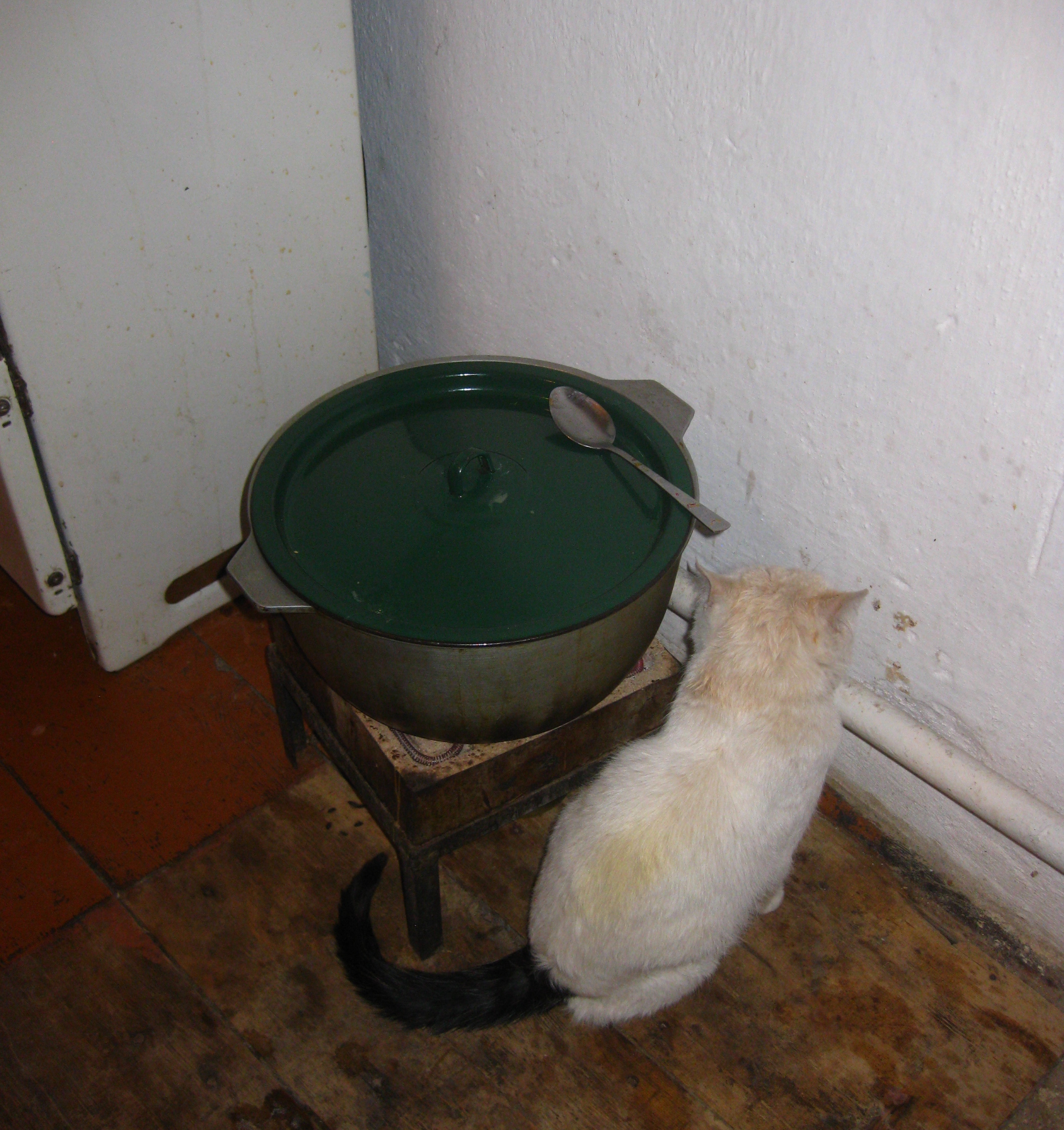
IMG_5314I can’t go out. I’m just going to stay indoors, next to this warm pot of food all day.

Discerning what’s horrible and what’s only unpleasant

Yeah, it’s going to sting a bit, listening to your boss’ angry words. But it’s only unpleasant. It’s not unbearable. You’ve had people yell at you in the past and you’ve survived. You’re still alive, reading this, so it must be true.

When we’re lacking in discipline, we’re often blowing things way out of proportion in our use of absolutes.

  • “I can’t turn in this paper unless it’s perfect.”
  • “I’m always late for everything.”
  • “If I can’t present myself as a perfect person today, I might as well not go outside.”

The truth is, there are very few things in life that are absolute, and there are very few consequences in life that are the absolute worst. The vast majority of your decisions and actions do not fall into this category. The things you think might kill you in reality will probably only sting. Sure, it’ll hurt a little. Getting a D on that paper is not going to be pleasant. But it’s not the worst thing ever and you will survive and have chances to write papers again.

Replacing deception with the truth

Now you have a list of the lies you’ve been telling yourself. This is a big step in shedding the weight of all the untruths that have been pressing down on your and wrecking havoc in your life. When you believe a lie instead of the truth, you learn to act and behave as if that lie were true. If you tell yourself you’re no good at cleaning the bathroom and that it’s icky and gross and you’re going to contract an unknown-to-medical-science disease, it’s going to be pretty easy to avoid cleaning the bathroom.

Instead, recognize this as a lie and replace it with the truth.

  • “It’s icky and unpleasant to clean the bathroom. But I’m not going to die. I do have a pair of gloves and I can wear them.”
  • “It’s ok if this paper is not perfect. Perfect doesn’t exist, anyway. I’ve put a few hours into it and that’s good enough. I can be happy that I finished a project.”
  • “I’ve amounted to a lot already. I have family and friends who care about me. I’ve had a couple different jobs already and those bosses decided to hire me so I do have desirable skills. Someone even liked one of my facebook posts yesterday, so I accomplished something. And even if no one does recognize me, I still like what I do and I can enjoy the work.”

After you’ve practiced writing out truth statements for each of the lies you collected throughout the week, try combining these steps. Over the next week, each time you hear yourself lying about a situation, recognize it, identify the lie, and then replace it by telling yourself the truth.

This is not an easy thing to all of a sudden start to do. You need time through lots of truth telling to work out of the habit of telling yourself all the lies you’ve been listening to for so long. But with small steps, you’re on the path to thinking truthfully about your life and the areas where you want to have more discipline.

—–

This is the first installment in a seven-part series on being disciplined. You can read each of the posts by clicking below:

God provides

I’m a cash-strapped Peace Corps Volunteer. A lot of it is due to my monthly salary of around $250. But a lot of it too is on my extravagant spending: a weekend by the lake. A $15 meal and a trip to the capital. Hours of phone calls to the states and in-country friends. A new shirt or hat or bag or a couple beers at the end of the day. The money never seems to fit my budget, or more honestly, my budget never seems to fit the money.

I found myself running especially low this month. But a surprise trip to the capital for medical leave gave me per diem to get through. And then just when I thought maybe my $6 a day wasn’t going to cut it, a reimbursement for underpaid housing payments appeared in my bank account.

A couple days later, Akmoor and I went to see a movie. It was the new historical film about Kurmanjan Datka, a queen of some Kyrgyz tribes around the turn of the 19th century. We were standing in line hoping to get tickets for a later showing so we could first go get something to eat. The line was several people long but what made it longer were the couple of people who cut in to buy tickets ahead of everyone else.

I complained loudly in Kyrgyz—the man who cut in said he needed a ticket for an earlier showing. I told him we were all in a hurry and he should have come earlier. He just laughed. His wife asked where I was from and I said, “I’m from an offended country!” She didn’t think that was funny. When the line moved on and the guy who had been right in front of us bought his tickets, he turned and handed us his change. It was 500 som, or $10, almost 2 days worth of per diem for me living in the city. He mumbled something about me speaking Kyrgyz, handed Akmoor the money, and walked away. It was exceedingly generous and very humbling.

So we got to see the movie and eat dinner for free.

These were awesome reminders of the way God provides. And then suddenly I was flooded with reminders of all the ways he takes care of me: A family back in the states who has helped me come home. A host father who slips me small pieces of wisdom and a host mother who always makes sure there’s food on the table, even when she’s not around. Peace Corps doctors who mediate health treatments and rally to my side. Friends who provide emotional support and reach out with community and humor. Locals so willing to host and cheer on and be resilient in the face of adversity.

These are all blessings that God rains down so abundantly and so generously. In our lives God provides for us. He provides for our joy. And in the end, he provides a place for us with him, forever. And in that place of golden streets and crystal sea, I think my salary for serving in God’s kingdom is going to be enough.

Preparing the sheep head


Cooking up some sheep for dinner is one of the things that Kyrgyz do best. I would say mutton, but really it’s just sheep. A big pot of sheep. You get used to it after a while, and it even starts to taste pretty good. I especially enjoy it when the power goes out and we’re eating in the dark.

Today we’re looking specifically at the sheep head (and legs). This is shortly after the cutting-the-head-off step which I thought I would spare all of you, and immediately following the neighbor-who-came-over-and-sliced-off-a-little-bit-of-the-raw-head-fat-for-tasting-to-see-if-it-was-any-good step. (I’m not entirely sure that one is standard.)

Yes, it’s a bit gruesome, but that’s what makes it fun, right? …right?
IMG_9562

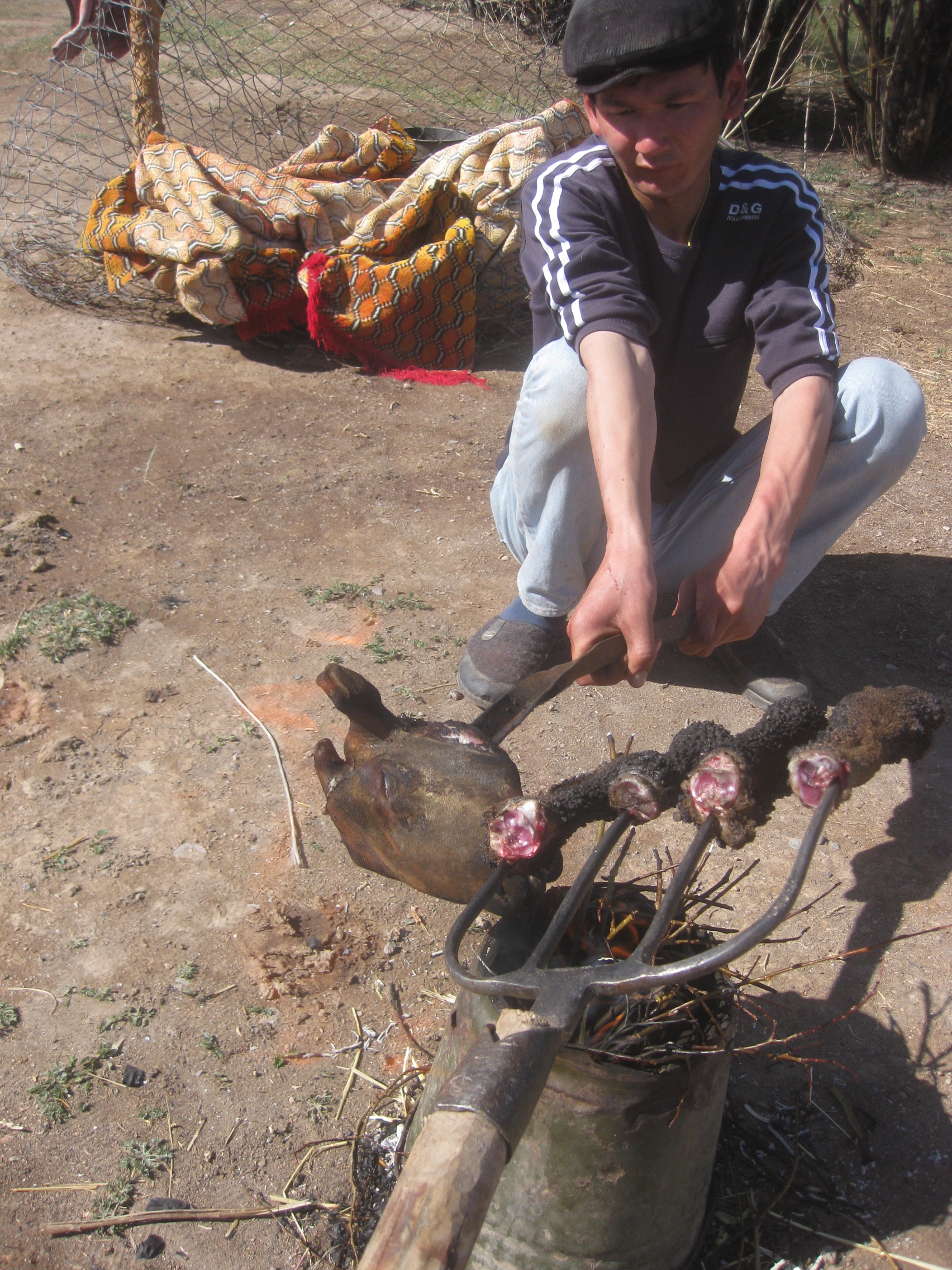
This is step one. Maksat took a break from lighting a fire inside of a bottomless, upturned bucket to snap this photo. The bucket acts as a kind of a makeshift blowtorch. Firing sessions are swapped in and out for the scraping of the burnt hair off the skin with a knife. After the firing comes the boiling.

IMG_9560

Here Maksat is preparing the “torch.”

IMG_9565

We had to keep yelling “white rabbit!” and hopping around the fire to keep out of the smoke of the shifting winds.

IMG_9566

The head’s getting pretty close to done, but there’s still some scraping to do on the legs.

IMG_8733

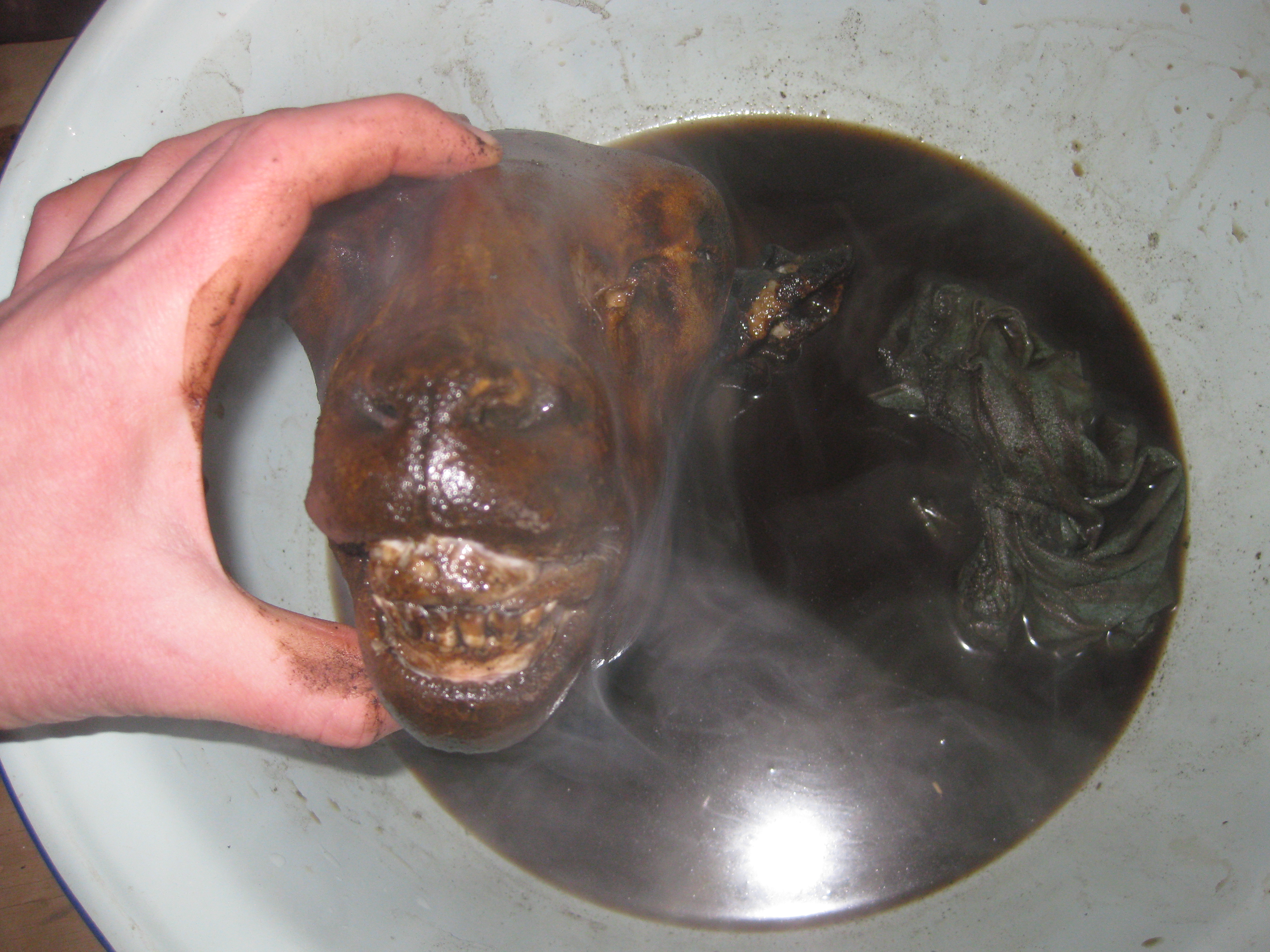
Now for some serious scrubbing with a rag and hot water. I think I might need to brush his teeth too. Next step, the boiling pot.


How to be happy

There’s no guarantee of happiness.

“Wait—but I thought I was going to be reading about how to be happy?” you say, “And I’d like you to give me back the energy I just expended clicking on your post.”

I’ll send some via e-mail, if you shoot me one first. (But you’ll have to cover e-mail s&h energy yourself.)

Life goes sideways, and fast. Many times in my few short decades I’ve found myself flipping over the handle bars and in that slow-motion moment thinking, “Damn. This is going to hurt.”

The secret isn’t in knowing how to always be happy. You won’t be. You can’t be.

Happiness is about knowing the final outcome.

And only one thing in all of human experience promises a perfect ending—faith in Jesus and forever life with him.

“That’s fair enough for you to say, if you buy into that stuff. False hope I guess is a kind of hope,” I hear some of you saying, “but the first mention of that spiritual stuff is where I sign off.”

But hang on a sec—it’s true, but not only that, it’s truly hopeful.

If it were up to me to create my own happiness I’d end up in one of three places: extremely selfish, surfacely ignoring the hurts of the world and smugly assertive while being hopelessly aware of how sideways my life and everything else was going; or, humble as a doormat and miserably depressed about my own failures, shortcomings and lamenting how life just wasn’t fair for…pretty much everyone; or, at some uncomfortable and uneasy spot in the middle, never being quite sure where it’s all going or why anything matters.

Luckily it’s not up to me. It’s not up to you. It’s not up to the efforts of anyone, except for one man, Jesus. Luckily for us we’re living in an age where he has already come and done the work and we have the opportunity to hear about it, welcome it and live by his life.

What does that mean, to “live by his life” and how does that make us happy?

It’s not about doing. It’s about being.

The fear of what might happen next and just-what-am-I-supposed-to-do-about-it is the biggest killer of happiness. Fear of an unknown future robs our peace, gnaws at our nerves, and holds us hostage to ever stepping out into green pastures by quiet waters. Without an assurance of the final score, we’re just wandering along, hoping to catch our own sort of happiness and hang on as long as we can before it dissipates and we’re left searching for the next oasis of comfort and emotional security.

When we focus on simply the state of being in right relationship with our creator by relying on what Jesus has already done, it no longer matters what happens in life. We can be “content in any and every situation, whether well fed or hungry, whether living in plenty or in want.”

Life with Jesus means simply living by the thought that his life and work takes the place of your life and work. At that thought there’s no longer anything to do. No ten steps to follow. No qi to absorb. It all comes down to one solid truth:

In the end it’s all going to be ok.

This is one of the most freeing thoughts that can occupy your mind. I challenge you to dwell on this for awhile. Meditate on it. Close your computer, walk outside, look up at the sky and say to yourself:

No matter what happens, it’s all going to be ok.

Living in this truth melts the outer crust of our timidity. It allows us to be happy with situations, with people, with life.

That’s what happiness is. Happiness is the freedom to feel all things and go through all things and to know that it’s all going to be ok. Happiness is allowing yourself to go to the places where all emotions lie and all circumstances dwell and to know that nothing can happen that will change your final outcome.

It allows you to live boldly, love deeply, laugh timbrously, and enjoy thoroughly. It allows you to cry when you mourn, to pray when you hurt and to fall on your knees in those crushing times. God is there in it all, is with you through it all, and no matter what happens in this life, is there at the end to welcome you home.