Author: Luther

They’re in it to win it

And I’m not talking about Kyrgyzstan’s chances to play in the World Cup, though there has been some positive movement.

I was sitting across the table from three recent graduates of my new school. We were chatting about university entrance exams, and all three were set to interview at the American University of Central Asia (AUCA) in Bishkek. We practiced interviews and essay formats and went over a few grammar questions.

These girls were already at the top of their games. Each girl placed in the top five nationally in one of Russian Literature, Kyrgyz Language or English Language Olympiads. Now they were competing for spots in a year-long prep program for the most prestigious university in Kyrgyzstan and for scholarships for an education they couldn’t afford otherwise. AUCA is also the most expensive university in Kyrgyzstan.

IMG_0171High school seniors at graduation, ringing the bell for the last time
There are cheaper universities and colleges in Kyrgyzstan, but few offer a high standard of education. With low salaries for professors and lecturers, many feel the need to accept bribes to supplement their incomes. This leads to a drop in the quality of education as many students opt to simply pay for their diplomas instead of submitting homework and attending classes.

This is a big reason why diplomas from the vast majority of the 50-odd universities in Kyrgyzstan are not accepted by institutions abroad. This in of itself should be a wake up call to those in charge of higher education. Corruption must be dealt a heavy and widespread blow from top legislators and administrators if the education system is going to have a chance at providing their students with quality education. There are many more students who deserve to be accepted to the few top universities than will be. Many will have to settle for studying in environments that reward those who pay bribes and punish those who refuse.

Earlier this week a message popped up while I was on Facebook. It was one of the girls I had briefly tutored and she was just writing to say she’d “entered to the New Generation Akademy at AUCA !!!” (I’d have used a lot more exclamation points if it were me!) It was super exciting to hear that one of them had gotten in. It’s still no guarantee for her whole university education—the New Generation Academy is a fully funded extra year of prep for university, and then students need to figure out their own methods of paying tuition. But it’s a great first step and one that will give attending students a quality education and experience resultant to their effort.

These kids are more than pulling their weight on their end of the line. Kyrgyzstan—it’s time to step up and give your students the chances they deserve.

I’m the foreigner

When the Japanese travel to the US and other foreign countries, it’s not uncommon to hear a Japanese person walking down the streets of, say, Las Vegas proclaim, “Just look at all these foreigners.” He’s looking right at hundreds of American citizens and it never occurs to him that in fact he is the foreigner traveling about.

It’s easy to fall into this trap. Suddenly you find yourself surrounded by people who are not like you and you feel them to be strange. But, being heavily outnumbered and after the novelty quickly wears off, your head tells you, “Wait a tick. I’m the one who’s strange!!”

Adding evidence are those vast numbers quickly pointing out to you all the ways in which you so expertly meet the criteria of being a strange foreigner. Sometimes though, it hits you all on its own, like when I met up with some American friends for the weekend at a rented apartment in the capital.

“Oh no. We’re now that group of 15 foreigners stuffed into a one-bedroom apartment, from which strange, ethnic smells waft and the sounds of new beats of music keep the locals awake.” Stereotyping is funny and cute until it’s happening to you.

Yet again it’s me on the other side. I’m the token American, pulled out at parties, name-dropped at school seminars. The one who’s expected not to understand, who sometimes finds himself sitting alone while everyone else is at a meeting I didn’t catch the memo for.

To some extent, no matter how long I stay I’ll always be an outsider. After all, this place isn’t part of my shared history and no matter how many days I lay out on the beach on Lake Issyk-Kul, my skin tone will never blend in. I suppose I’ll always have this “cute” accent too, as some of the more kind-hearted so eloquently patronize.

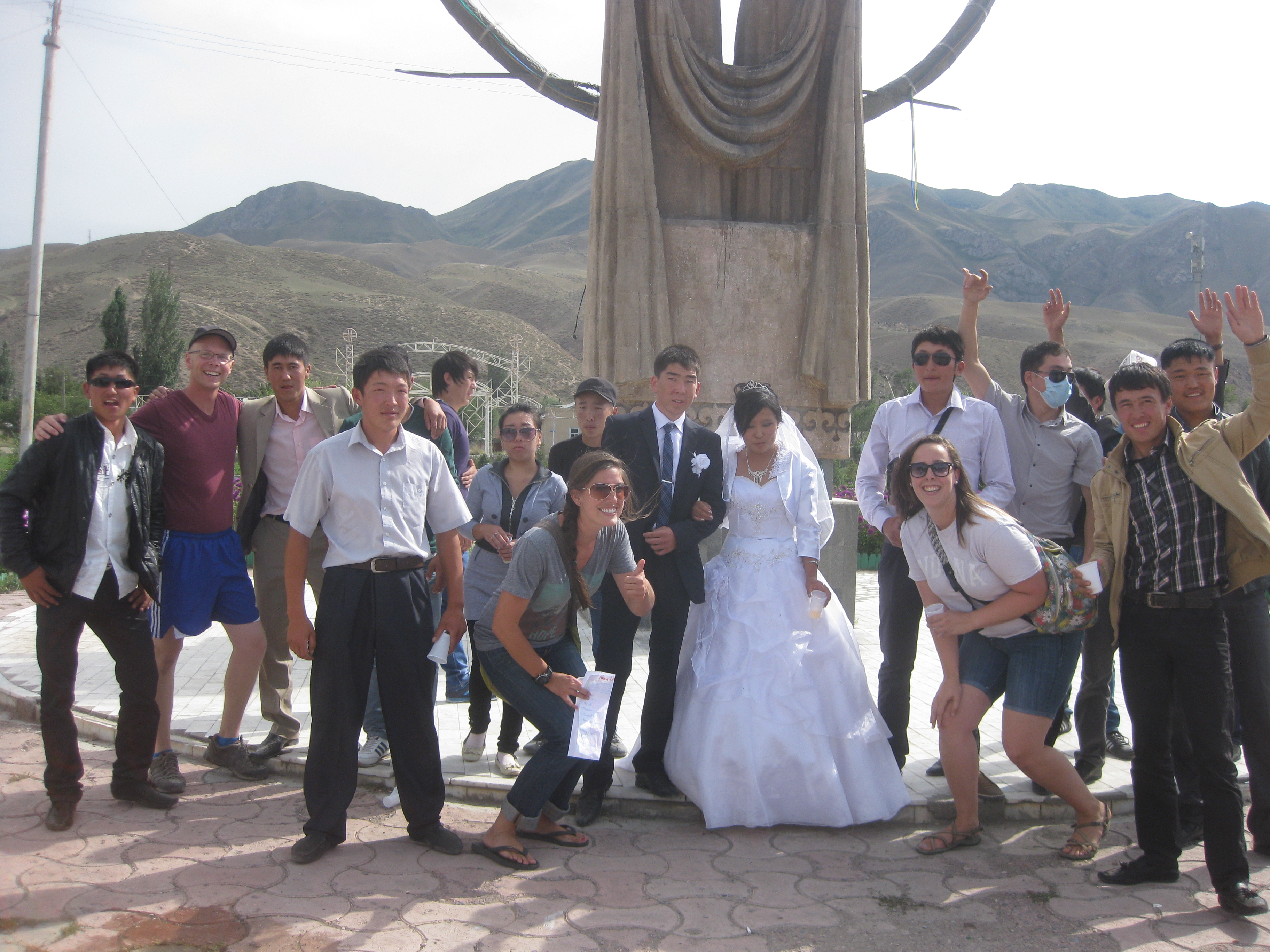
wedding crashersWedding crashers, Kyrgyz style. You can see the relative joy.

When I lived in Japan, I never did become part of their culture. But that’s also not surprising due to their general culture of insider status only being granted to those born to two Japanese parents in Japan and staying there perpetually while constantly and continually displaying centuries old established social mores.

Luckily I’ve got it a little bit easier here in Kyrgyzstan. Every host family I’ve lived with has referred to me as their son, with even relatives accepting me into the fold with corresponding labels. People want me to have a Kyrgyz name and encourage my participation in holidays and so forth. (Though the whole Kyrgyz name thing might have something to do with “Luther” being completely unpronounceable in any language, or dialect for that matter, outside of middle America—I was “Duusaa” in Japan and now enjoy the extra 2 or 3 “rs” added to my current name, “Liuterrr.”)

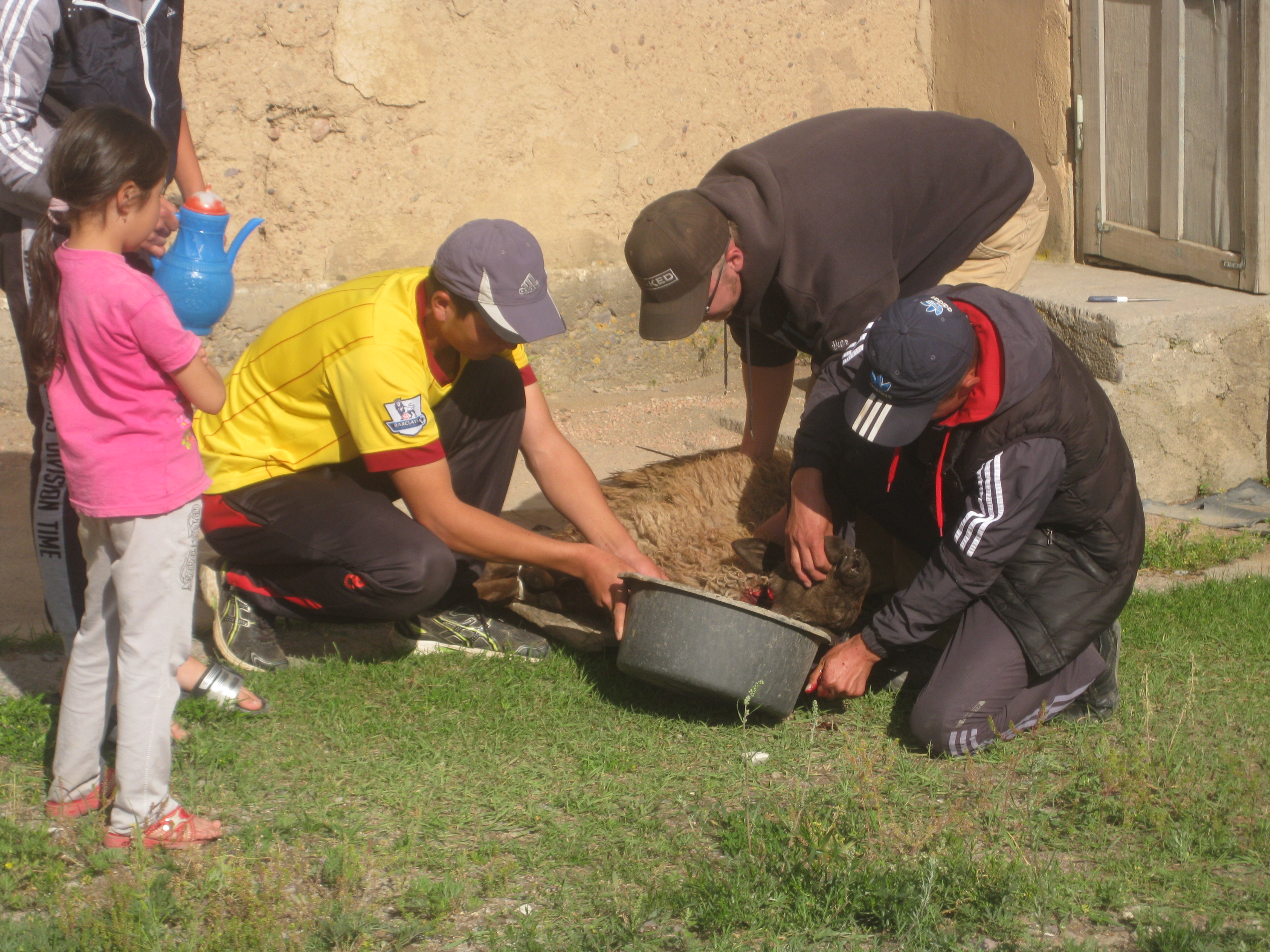
Well, to wrap things up here, I’ll make a bold promise to you all so you can help hold me to it: As soon as physically possible, I’ll be adding a post about how to serve sheep’s head. For those of you who find yourself in Kyrgyzstan, knowing how will go a long way in the effort to scrub down that rough and itchy foreigner edge we so easily display.

Dear students: It doesn’t matter

If I had a time machine I know the exact moment I would go back to—a breezy fall day in 1997 in the stairway of Ramsey Junior High School in Saint Paul, MN. There I would find the world’s worst perpetrator with a bowl-cut and a backpack. A young teenaged kid wearing—horrors!—a Nike sweatshirt with Adidas wind-pants.

I had unknowingly committed a mortal sin, just above blasphemy of the holy spirit I believe, by wearing two different name brands on the same day. I wished the devil would just take me right then and there to the fiery hell I deserved. It seemed better than the tortuous words coming from my fellow 8th grade classmates.

In that moment my 2014 self would walk over, lay a hand on my sagging shoulder and whisper: it doesn’t matter.

It doesn’t.

You might wonder why, with the entire age of the world at my fingertips to explore I would choose to enter this seemingly insubstantial moment in time. Here I was just a kid with a wardrobe choice. But it was more than that. They were the clothes that made me happy. Made me comfortable. Made me feel like…“me.”

In that moment of ridicule the value of my own personhood was being called into question and it made me immediately reel with self-doubt, shame and apprehension.

Every young person has these moments. It might not be the clothes on your back but instead your choice of college. Or what you want to study. Or even the moves you show on the dance floor.

How you choose to live—whether in the shadow of others’ approval or in the freeing light of your passions—affects everything else in your life.

Oh young people of the world! I’ve seen you stand at the crossroads of these choices, seen you labor over them, bleed over them, weep over them. Seen you allow others to stand in command over your decisions and actions and movements, seen you held in that tortuous position where you never know when the hammer is going to drop.

And drop it will. Others can be so cruel in response to your dreams, especially in those first steps. That time in your youth when you venture timidly out from the camp of conformity into uncharted forests with rescue ropes of gossamer still tied to the approval of others. When that frailty is oh so gently tested you suddenly find yourself cut loose, and tumbling, flailing out of the circle of approval, you trip out into the wild away from the warmly lit ring of acceptance.

In that moment, don’t turn back to the safe circle of dying embers. Dare instead to forge a new path.

IMG_7988

You’ve been conditioned through those agonizing years of adolescence to believe that each little shoe strap, every wisp of hair, each angle of your “duck” lips is going to be picked apart, stared at, and scrutinized. You’ve learned to take the safe route, to check your dreams, to process your decisions in the mill of conformity and approval.

And how could you not? It’s everywhere from red carpet walks to pop up cosmetic shops to scrolls of comments in Facebook newsfeeds. You’re told to choose your fashion with the eye of a trend-setter, to always check the reactions to your choices, to hover in a constant state of FOMO—the fear of missing out.

You stall in these moments because time only moves one direction and somehow the world has convinced you that the peak of all creation is now.

The trials and doubts and questions you find yourself in today are not the culmination of every past moment of your life. This moment is always a new beginning. An umpteenth chance. A fresh page to start writing a new story. This moment is always the start of everything else, and what follows is up to you.

Dear friends—there is so much beyond junior high. There is so much beyond high school. There is so much to life after university!

So many go through it thinking there must be a best plan, a single track to follow and if it gets derailed every future moment will be lived out in a second rate life, or worse.

Here’s the secret: There’s no plan A. There’s no best option. Life is not built upon first place finishes but on second chances. Life need not follow someone else’s perfect vision. It’s your eyes in your head, your head on your shoulders and your call as to which way they travel.

For it’s not the approval that matters and not the path, but your love for what you do and the passion by which you do it.

—-

What passions will you let break free? What makes you come alive?

Things I’ve discovered about Kyrgyzstan

Part II of ‘Things I’ve discovered about America.’

Мекениңдин кадыры башка жакта билинет

“The value of your homeland is known once you’re in another place”

As a foreigner living in Kyrgyzstan, I’m asked all the time what I like about it. It’s a regular part of introductory conversations. Some people are just looking for the typical answers like, “it’s nice” or “it’s pretty” or “the food is…edible.” But others really want to hear your opinion. It’s not normal for foreigners to live in Kyrgyzstan outside of the capital, Bishkek, for any extended period of time.

The westerners who do venture forth usually do so in government registered vehicles with tinted windows and fly through the villages, staying not much longer than the time required to tick a box on their grant checklist or shake a few hands.

It’s not always their choice—they have loftier goals than the common Peace Corps Volunteer since most are busy doing great things at the national level. Yet, there are so many aspects of a place that can’t be experienced until you dive in and stay awhile.

IMG_5603Hanging out with Grandpa, watching TV

The fly-by rule is also true of many natives. There are Kyrgyzstanis who wouldn’t spend 2 weeks outside of Bishkek much less 2 years. It’s hard for them to believe why someone would put themselves through that kind of “ordeal” for the sake of “peace and friendship.”

Some believe we’re operating under ulterior motives beyond our work at schools, village health committees and organizations. Add to it the decades of being conditioned for suspicion, and you can understand why some people seem a bit incredulous that we would give up 2 years of our lives to live in tiny villages without the comforts of showers or coffee shops or broadband internet or whatever else it is that Americans spend all their time on.

In truth the question of what I like about Kyrgyzstan does make me a bit introspective. Why am I in Kyrgyzstan? Why did I re-up for a third year? What is it exactly that I like about the country?

So here it is, a working list. Maybe I should call this Part I: What I’ve discovered about Kyrgyzstan:

  1. I miss the Kyrgyz language. It is fun and exciting to see the world through the lens, or in this case filter I guess, of another language. Specifically I miss saying, “God willing.” There’s this deference towards a higher calling on life that I miss being reminded of.
  2. Friends. I’m not ready to leave and I’m thankful for another year with them.IMG_0265
  3. The way you can always catch a ride, if you’re willing to expend a little patience. Since I don’t have my own car in Kyrgyzstan, I have to rely on public transportation. Oh wait—there is no public transportation out in the regions. So you rely on people going the same direction as you. It’s usually fun, and if not, there’s always a story to tell.IMG_0242
  4. The incredible potential. Kyrgyzstan is a battle ground for good development and in the last decade or so businesses and organizations have been springing up like the wildflowers that cover the mountains. I have a few ideas floating around for how to maybe stick around after Peace Corps.
  5. Working with my hands. I never made the time for this in the states.IMG_7419
  6. There’s an entire set of history, pop-culture, local lore, friends, systems and a myriad of interests that’s only accessible within the Kyrgyz language and within the borders of the country. It’s an incredible notion that there are all these totally different places in the world waiting to be explored.
  7. Kyrgyz proverbs. There are hundreds. You’ll keep hearing about these from me.
  8. Akmoor. She’s a lot of fun to be with and I miss her!
  9. Joking around with friends and being ridiculous.
  10. Maksym. It’s this naturally carbonated, non-alcoholic drink made from wheat, corn and barley and is sublime. You can buy it from little stands all over the capital, and many people in the villages make it in their homes. It’s a summer drink and will keep you strong, healthy and I suppose hydrated. It’s delicious!Luther Shoro
  11. The benefit of a community that knows each other and has each other’s back. In small communities you have to put up with the gossip and the fact that you can’t even make a dash to the outhouse anonymously, but the trade-offs are huge: you find a group of people that look out for each other, never let someone be alone and pitch in wherever help is needed. A sense of belonging.
  12. Vodka being the cause of, and cure for, all of life’s problems.
  13. Komuz music. The komuz is a 3-stringed lute like instrument. The sound is lovely and quite unique. While its tone is not like a violin, the komuz is comparable in the fact that it takes a lot of practice to make it sound beautiful. I purchased a cheap $30 one and have so far proved to be quite the talented hack, so I enjoy listening to people like these guys play instead.
  14. Canning delicious pickles and winter salads.
  15. Students who make you feel like a superstar. IMG_6346
  16. Extremely long meals involving many courses.
  17. Bishkek! The capital is also the “true Kyrgyzstan” because it exists there. It’s my opinion that the difference between village culture and city culture is bigger than the difference between America and Kyrgyzstan in general. (Think about rural life America vs. City life America and all the ways we contrast those.) The capital is where a lot of cool things are happening in education, health and business and there are a lot of opportunities for volunteers. Bishkek is also a good place to come to take a long, hot shower, have a drink and use the internet. 🙂

—–

What else would you like to know about Kyrgyzstan? Send me any questions and I’ll answer them in future posts!

9 Myths and Misconceptions about the Peace Corps

The newsfeeds of today are proof enough that anyone with a MacBook, a latte and a half-baked opinion can be an expert on pretty much anything. Including, apparently, a government agency program which they have never researched, never applied for, nor ever served with.

Comments under online articles relating to the Peace Corps are awash with misinformed statements and stereotyped assertions that claim unassailable conclusions about everything from its effectiveness to its worth.

Yesterday Peace Corps rolled out their complete overhaul of the application process. And with that announcement comes once again the enlightened comments in the newsfeeds.

The following is a list of myths compiled and summarized from the comments under this recent Washington Post article about the new changes in how people apply for Peace Corps service.

Myth #1: Volunteers are over-privileged, upper-class white kids.

Fact: While only one-quarter of volunteers are minorities, the Peace Corps has begun an initiative to encourage more to apply including hiring 20 new staff for the Peace Corps’ diversity office to recruit more minorities.

The vast majority of volunteers work hard, humbly serving while growing their own skills in order to meet the needs of their local communities in challenging environments. Volunteers learn a new language, engage a new culture, and learn to thrive away from their old support systems.

Myth #2: Volunteers are just looking for a 2-year vacation.

Fact: How many people do you know who vacation in tiny villages in developing countries? Usually when one goes on vacation, they try to do less work in a more comfortable environment, not the opposite.

Volunteers also give up 2 years of salary potential—that’s 2 years of building up 401Ks, or saving for a house. It is true that volunteers receive $275 for each month served, though this “resettlement allowance” is often quickly used as volunteers search for paying jobs after finishing service.

Myth #3: Volunteers force their presence upon communities that don’t really want the volunteer around.

Fact: Peace Corps Volunteers are invited by the countries and communities in which they serve. Volunteers work directly with counterparts who had to apply and be accepted to host a volunteer in their organizations and communities.

Myth #4: The Peace Corps is a very expensive program and the benefits don’t match the costs.

Fact: The 2014 budget for the Peace Corps is only $379 million. That’s it. Guess what the Department of Defense’s budget is? $495 billion. That’s 1,300 times bigger. If the DoD had the budget of the Peace Corps, it would entirely deplete its annual funds before 7:00 am on January 1st.

At under $400 million per year, or around $50,000 per volunteer, the Peace Corps has huge ROI when it comes to grassroots diplomacy. Even if there were zero technical benefits for served local communities (which is not true), the relational and image benefits make it a no-brainer for the government.

Myth #5: Volunteers spend all their time on the internet and texting other volunteers.

Fact: Volunteers use technology for best practices. Fact: 2014 is not 1961. More students in my village have smart phones than running water in their homes. Technology changes and volunteers must keep up with the technology around them in order to implement best practices and reach as many people as possible.

One really cool Peace Corps Volunteer initiated project that came out of a Central American country was setting up a system where locals could text reproductive health questions to be answered discreetly by informed professionals. This effective model is now being implemented by other posts around the world.

Volunteers today should correspond with their organizations and local counterparts by e-mail, Facebook and text because the locals are using such technology and it allows volunteers to collaborate and be more effective in their work. 

Myth #6: The Peace Corps isn’t doing its job—just look at how effective they were in Ukraine.

Fact: The goals of the Peace Corps are “1) To help the people of interested countries in meeting their need for trained men and women 2) To help promote a better understanding of Americans on the part of the peoples served and 3) To help promote a better understanding of other peoples on the part of Americans.”

No where does it include the goal of host country government reform. Peace Corps Volunteers do not work for the Foreign Service. Peace Corps volunteers do not work for USAID. Volunteers work relationally to promote better understanding, while sharing their professional skills.

Myth #7: Applicants and Volunteers should be in command of administrative processes. After all, the volunteer exists to be served.

Fact: I’ll just include the whole comment here because it’s quite revealing. It’s posted by a “Chuckludlam” which appears to be the same volunteer who sued the Peace Corps.

“The Peace Corps changes to the application process are all about process. The problem at the Peace Corps is all about substance.

Now applicants can choose where they will serve. Fine. But the Peace Corps has fought to deprive the applicants of the information they need to make this choice. To secure documents crucial to applicants who are selecting which country they want to serve in, my wife and I had to sue the Peace Corps in Federal District court.The PC conducts annual surveys of the Volunteers and if you have the breakouts of the survey country-by-country you can rank the countries — best to worst managed. There is no more credible source than the Volunteers. Of course, the PC desperately wanted to deprive the applicants of this vital information. It fears what will happen if the applicants all want to go to a well managed country.

We won the lawsuit and will soon publish the country rankings on PeaceCorpsWiki. We also had to file an appeal with the PC to secure the country-by-country breakouts of the early quit rates — another crucial measure of the health of a specific country program — and we will be publishing these on PeaceCorpsWiki.

Applicants are consumers and if they go to a restaurant they get ratings. If they go to a college, they get ratings. They get ratings of professors. They get ratings of everything, but if they are asked to spend two years of their lives in the bush, the PC doesn’t give them rankings. If the PC refuses to post this information, every applicant should put their application on hold until they get the ratings they need to make an informed choice.

Going to a badly managed country with a high early quit rate — why would any applicant do that? Would they go to a restaurant rated for having bad food, bad service, and occasional food poisoning?”

The strangest thing about this comment is the part that says, “applicants are consumers” and the part where commenter Chuckludlam compares applying to the Peace Corps to choosing at which restaurant to dine. The last time I checked, going to a restaurant was about being served, not serving others. It would be pretty strange if a restaurant invited you in and you told the server to sit down and then you went back in the kitchen and cooked him a meal. But that is the type of service true Peace Corps Volunteers are doing every day.

Volunteers are not consumers. Volunteers are, well, volunteers. This doesn’t mean volunteers shouldn’t work under good management and that the Peace Corps doesn’t need reform. We’re not heading out in the “bush” in order to suffer.

Yes, the Peace Corps must become a better organization and a safer environment for Volunteers. Yes, staff must become more competent. Let’s keep in mind, however, the words of a certain someone close to the Peace Corps: “Ask not what your country can do for you; ask what you can do for your country.” We as volunteers and applicants should not adopt a view of entitlement.

Myth #8: Country rankings and early quit rates are the perfect litmus test for a Peace Corps country.

Fact: The rankings that you hear about are based on surveys submitted by current volunteers. These volunteers take a survey that asks questions like, “are you satisfied with your country director” and “how well-prepared were you after the training period.” Host country staff go through changes and bad management doesn’t always translate through organizational memory. Rankings change year to year even within the span of 2-year contracts.

Early quit rate means the percentage of volunteers who do not finish their 2-year contract in that country. The spectrum of reasons why volunteers leave early is wide. Some go for medical reasons, some don’t enjoy the work, some have family matters in the states to attend to.

Additionally, no one is saying that service in each country is equally as difficult. Everyone’s situation is different and each volunteer will encounter unique challenges.

One of the “Core Expectations of Volunteers” is that volunteers “serve under conditions of hardship, if necessary…” Many volunteers simply do not count the cost before signing up, or don’t realize going into it how difficult it can be. Putting applicants totally in control of how they serve and under what conditions would only fuel the attitude of entitlement.

But many leave for reasons outside of their control. Our post recently had an amazingly successful and wonderful volunteer leave his contract early to go home and care for his mother. In the rankings system, he would be counted in the so-called early quit rate. The numbers that “don’t lie,” also don’t tell the whole truth.

Myth #9: The Peace Corps is an out of touch bureaucracy more interested in perpetuating its existence than improving how it functions to serve volunteers.

Fact: The Peace Corps as an agency and Peace Corps Volunteers are not the same thing. Too often critics equate the failures of the “bureaucracy” with ineffectiveness of volunteers. The real work of the Peace Corps isn’t the bureaucracy but the feet on the ground.

Yes, there are problems with the Peace Corps as an Agency. Yes, it needs to change. But we must separate the operations of the organization from the work volunteers are doing when it comes to evaluation. Just because there are things that can improve within the organization doesn’t mean individual volunteers’ work is ineffective or not worthwhile.

The Peace Corps staff at my post repeatedly state that they exist for us as volunteers. That is their job. There are things that need to improve, and volunteers regularly voice their opinions and the Country Director and Director of Programming & Training are addressing those issues with sincerity and competence.

They know and have stated that the new application process gives volunteers more control over where they go, and therefore they as staff need to work better to make their post attractive and successful for future applicants.

Fact: Reform is coming

When it comes to large organizations, change doesn’t always come about as quickly as some would like. But reform is coming as evidenced by the sweeping changes made this week.

For those who comment and voice their uninformed or poorly concluded opinions the best advice is 1) be patient 2) come to this with the attitude that things aren’t always black and white, and 3) understand that volunteers are in this to serve and do their best to fulfill the mission of the Peace Corps to civilly, humbly and respectfully “promote world peace and friendship.”