Author: Luther

Relationships are a marathon, not a sprint

I’m really bad at relationships. Like, really bad. In my life I’ve had 3.5 significant relationships, and all of them have crashed and burned during the 4-5 month range. So as this current one approaches the 5 month mark, I’m getting nervous. In what brilliant way will I manage to mangle this one beyond all recognition rendering it unfit for the gnarliest of salvage yards?

I used to run 800 meter races. The emphasis here is on the “used to.” The thing about an 800 meter race is that it is essentially a controlled sprint. When the gun goes off, the method is to jump off the blocks, sprint into position and then hold yourself right at the threshold of death for a little over two minutes, with your heart trying to pummel its way out of your chest and your legs telling you you should have been finished 700 meters ago.

That is pretty much exactly the way I run relationships. My heart is going so fast it would rather vacation outside my body and looking back I can only think about how I should have ended it several months before I found myself barreling down the track, exhausted and trying to support a brain made of oatmeal with legs made of rubber. With a current record of 5 months for a relationship, this essentially means I should have ended them before they started.

Yet I want to be in a relationship. I want that feeling where my head is in the clouds and my stomach is hovering just below and every swoop and turn and dive makes me weak with joy and excitement. Oh wait—that’s just air sickness and jet lag.

In relationships, I have no idea what I’m doing. It’s only verbally dawned on me that maybe I should take it slow. That maybe the little character flaws I see in her are just called being human. That maybe the little argument isn’t a red flag but just a Tuesday night. That maybe, just maybe a whole future isn’t locked in in a single weekend.

IMG_9732Unlike me, Akmoor has had this Mickey Mouse towel for almost 10 years. Jealous.

This past weekend my almost-five-month significant other, Akmoor, and I met with our pastor to talk about our relationship and ask for advice. We haven’t gone public with our committed relationship yet (you know, “Facebook official” or in other words the true mark of a serious relationship) and we figured it’d be better to talk about it in person before the “likes” and “huhs?” start raining down on our newsfeeds from actual real life friends. The advice he gave suddenly drew memories of advice I received from others over past relationships: “Get to know each other.”

Get to know each other. What could that possibly mean? I asked for clarification. Our pastor was like, “You know, get to know each other.”

Hmm.

I suppose we could do that. I suppose we could meet each other’s friends and do each other’s hobbies and ask questions and have conversations and share activities and be there for each other just to say hey. But how much time is that going to take? I want that relationship now. I want that unshakable trust, that deepest desire, that blind and assured confidence that sticks up for you, even when they know you’re wrong. And I want it immediately.

No. It’s marathon time. It’s time to slow up. I’m never going to make it at this pace. We’re never going to make it at this pace. I’d rather just finish than go for the personal best and burn out before the first water stand. Because a relationship is not in the sprint. It’s not in the kisses that say “I’ll miss you” as you head to the fridge to bring back a beer. It’s not in trying to figure it all out so that you know she’s the one you want to date. You can only figure that out as you go through it—as you go through it in time.

It’s in the slow Sunday afternoons. It’s holding hands on the bus. It’s the comfortable silence. It’s cooking dinner and picking up the kids and rushing off to work and looking at the same TV. A relationship is made bit by bit, shared experience after shared experience. It’s looking at each other and saying, “Ha. I know what you mean. And remember when…?” Yes, relationships are marathons. That’s what they tell me anyway.
A task from God

Everyone needs a purpose. A cause to champion. A journey to undertake. A reason to wake up in the morning. This week, mine happens to be feeding sheep.

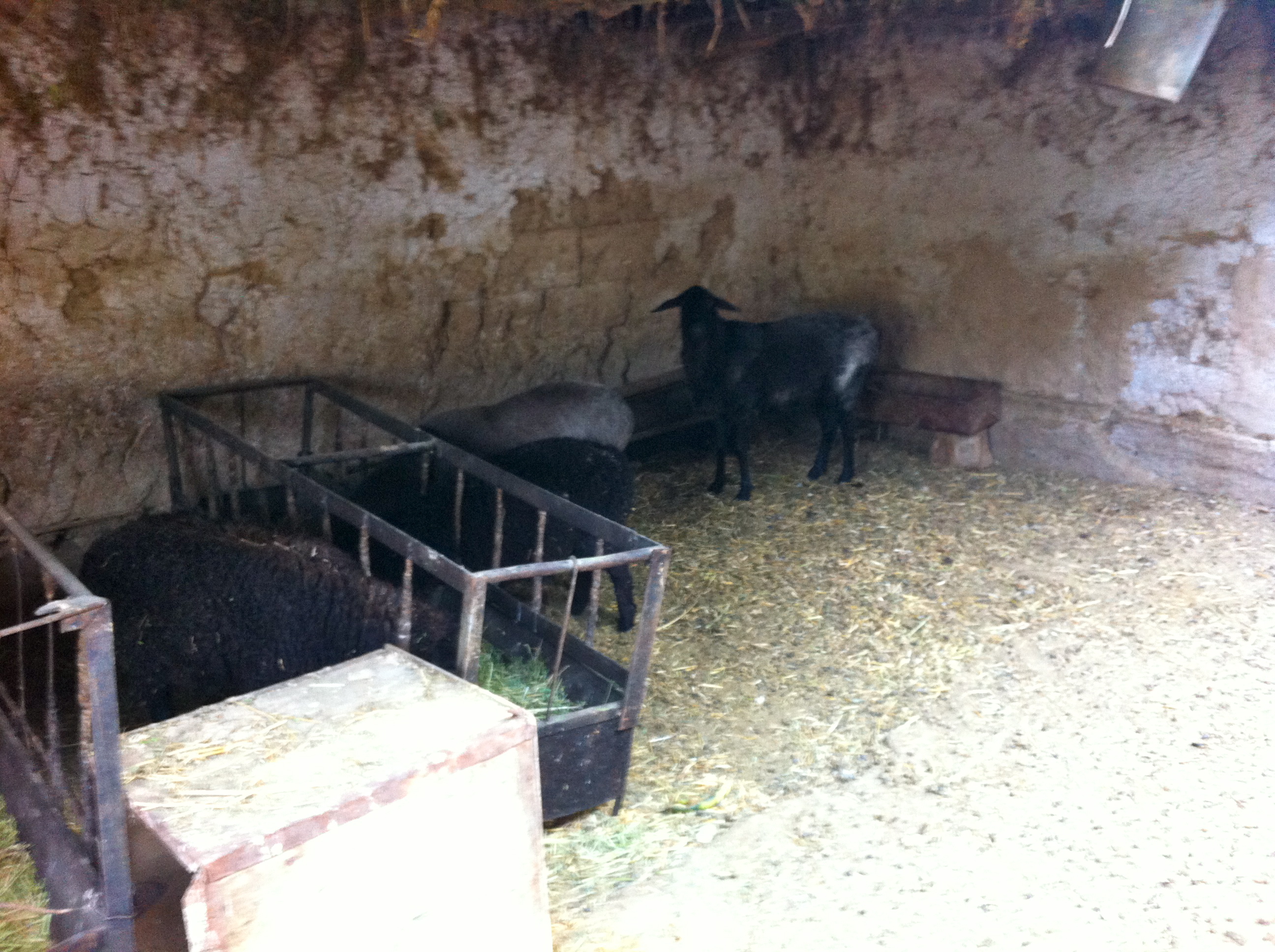
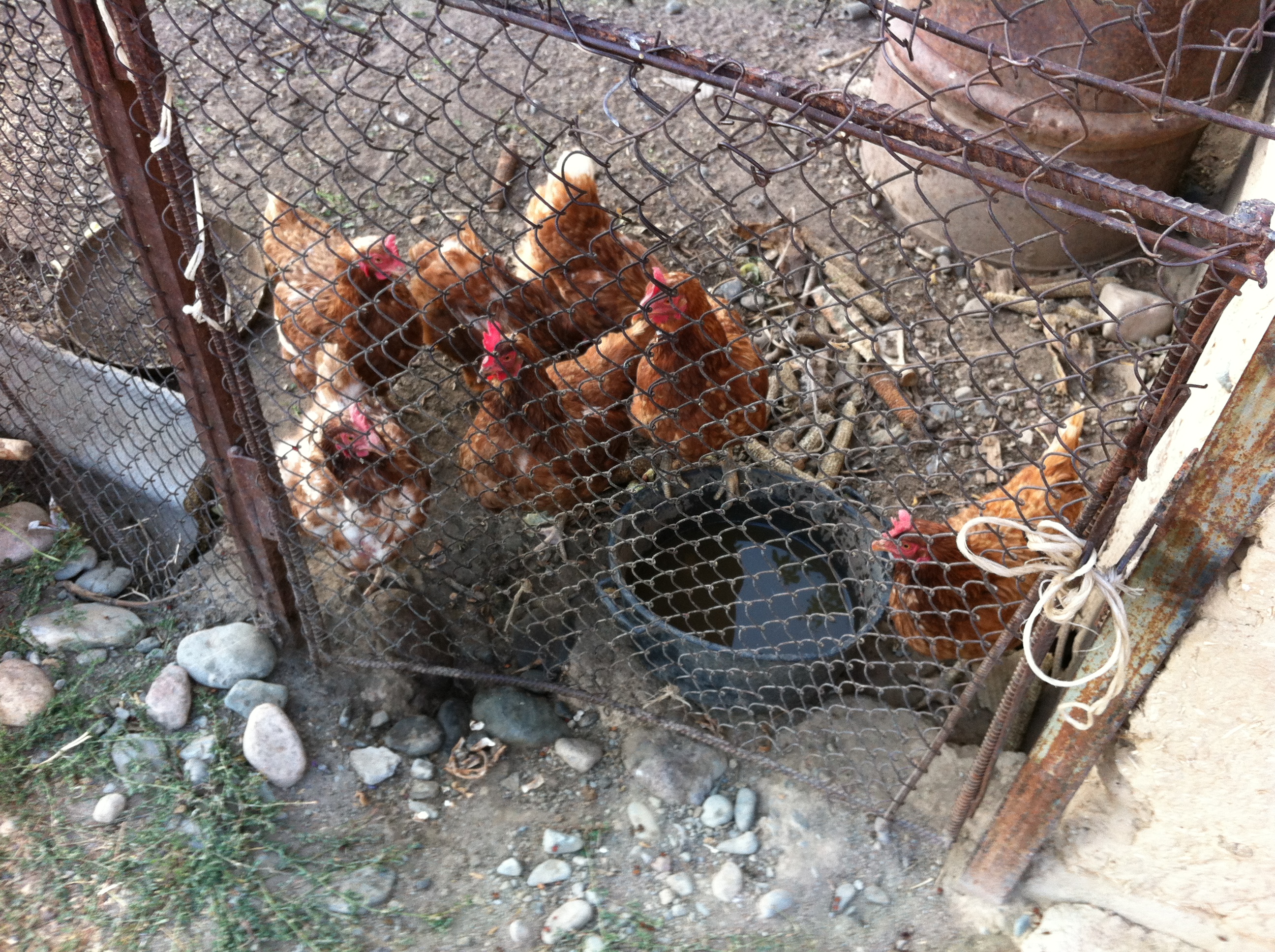
Through two years of living in villages I had never once been responsible for any animal—save chasing two wanderers from the flock back down a hilltop—and now that I’d come to the “big city center” the lives of four sheep and five chickens had been suddenly thrust into my hands.

Living here at the “Doctor’s house” with running water, a washing machine and 3G internet, I pictured a life of privilege, a life of ease. There was going to be none of this getting-my-hands-dirty stuff.

So it was I found myself, not two steps through our gate having returned from a mini-vacation on the golden shores of the mountain lake Issyk-Kul, wandering back to the sheep pen in my flip-flops.

My host dad, or Ata, was taking the family that afternoon for a week of wedding parties in the capital and it was going to be my task to look after the animals. He started immediately into the details—how many grams of jem a typical sheep ate per day, how full to fill the water trough, where the extra chicken feed was kept. I pulled out my notebook and started furiously writing so as not to mistakenly forget something and end up with a dead $100 bill on my hands.

We made our way over to the grass pile and a home-made grass chopping table. Operated with your right hand as you pushed the grass through with your left, it was essentially an enormous paper cutter where you could lop off your own hand before you realized what was happening. I took small condolence in the fact that I would be operating this thing at a groggy hour and made note to boil coffee before emerging into the morning air.

IMG_1146

“Do you know why I like you, Luther?”

The question came abruptly as I was chopping the grass.

“Huh?” I answered, wondering if I had heard the question right.

“Do you know why I like you?”

“Uh, no, why?” I stopped cutting.

“You’re like my son. You’re my uulum. You know I had a son—he was your age, born in 1983. He died though. And now you’ve come to our home.” I saw a single line of water fall from the corner of his eye.

I nodded somberly, trying to find the right words to say. They had told me the story before, during one of my first days here in June. It happened three years ago. Their son had become ill suddenly and the doctors didn’t know what to do. He had been flown to Moscow, but the respiratory illness had taken hold and nothing could be done. He left behind a wife and a daughter he would never meet—his wife was pregnant.

Now their daughter-in-law and grandchild live in Bishkek but they don’t get to see them often. Not having remarried, she spends most of her time with her parents.

“Do you think about him every day?” I asked stiltedly, hoping I had phrased it respectfully.

“Of course. Of course.”

I looked down and fidgeted with the chopping table.

“You’ve been tasked by God—taking care of these animals,” he said.

I tried to swallow the lump that was forming in my own throat and continued chopping.

After a moment he added, “And don’t chop your fingers off. We don’t need any of that.”

We moved on to the chicken coop and Ata pointed to where the chickens laid their eggs. There was a single one waiting to be placed—unwashed—in our refrigerator.

IMG_1037

My family took off later that afternoon and I had a quiet house to myself. In the evening I slid into my now muck covered flip-flops and trudged back out to the pen. The sheep sprinted in circles to clear away from this new force in their midst, vacillating wildly between distrust and the animal instinct of an empty belly.

Poking its head out into the light, a thickly brown sheep hobbled up to the feeding trough. I gasped in horror as I saw my God-given task’s leg dangling loosely from the knee. I immediately called my host mother—the only one to whom I felt I could break the news—and was told not to worry. It had been sick. I texted my brother thinking maybe she hadn’t understood my fervent Kyrgyz—butu syndy!—but he replied back that yes, the lamb’s leg had broken a few days before.

I felt awful. I didn’t know what the procedure was for a broken leg—was this what we did? Just leave it until it fell off? Or was the lamb to be the next sacrifice to our pantry? Could you even properly serve a sheep with a broken leg? And what about it’s own misery? And if not for the sheep’s sake, then maybe would the adrenaline surging through its muscles make it taste strange? These wonderings washed through me as I watched the pitiful thing struggle on its three legs.

“The world is broken,” I thought.

And I thought about God’s glory and the mystery of his sovereignty over all things. Of how his greatness shines forth in the handful of barley scattered on the ground, of chickens scratching the earth and eggs hidden among the grass. Of God’s knowledge of the broken leg and how much more he cares for his two-legged sheep, wandering upright on the earth. How we too are wayward and sprint erratically, choosing between his glory and our own.

Here I was, placed in responsibility over one, tiny little sliver of the world and I already felt the weight of it, pushing down between my shoulder blades, seeping into my heart, a heart still beating three years beyond my brother’s. I wondered if this is not a tiny bit of how God feels for his earth, his heart beating for the world, his own body broken for it, his blood spilled out over the same earth that we, his little creatures, tread.

Flowers of Kyrgyzstan

By request, I’m posting pictures of flowers in Kyrgyzstan. As a qualifier, I am no expert on flowers anywhere, much less in a place where all of the flowers haven’t even been classified yet.

There are incredible opportunities for those who love flowers to explore and discover here in the Kyrgyz Republic. I’ve even found a Dutch botanist on the internet who gives flower tours. You can check out his website here. (Not sure if the tours are in English or not.)

Here are simply a bunch of pictures of flowers I’ve taken so far. I need your help in identifying them! The only name I know for sure is that of the very strange koko or “Adam’s Apple” flower. Can you see why it’s called that?

Without difficulties, there’s no reason to live

“Makal” in the Kyrgyz language means “proverb.” Kyrgyz is full of wonderful and puzzling little proverbs – some that match common proverbs often heard in English and some that are real head scratchers. Most Mondays I’ll post one of the more fun ones for you. Let’s see if we can’t make some of these commonplace in America by the time I get back!

Жизнь без трудности проживать не стоит

Кыйынчылыксыз жашоону жашап кереги жок

Without difficulties, there’s no reason to live

In this version of Makal Monday, we find ourselves in the middle of a Russian idiomatic saying. Russian culture has had indelible influence on present day Kyrgyzstan, and many of the truisms uttered in Kyrgyz have their origin in the Russian language.

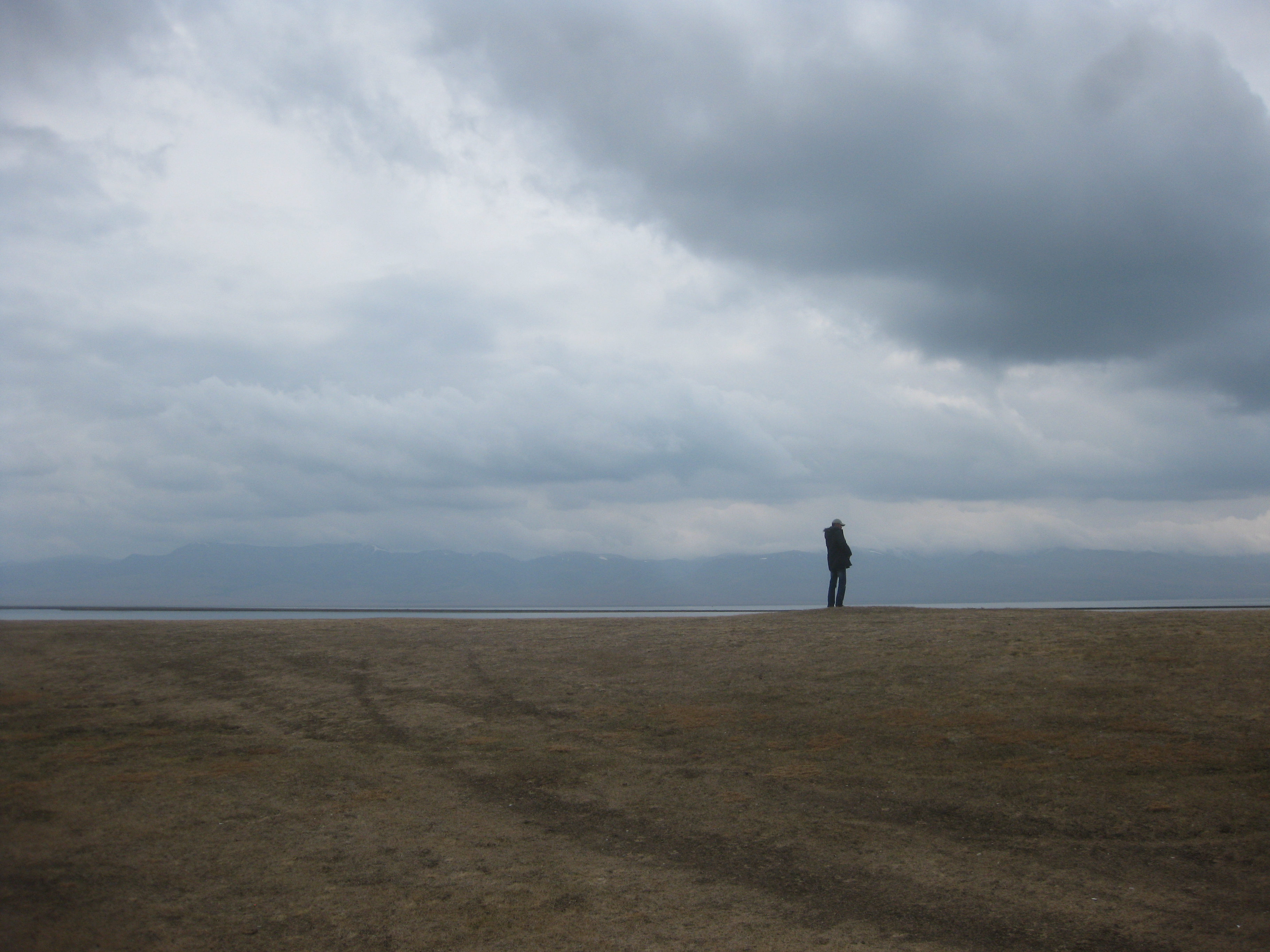
My friend Maksat is yet another king of the proverbial turn and can match almost any circumstance to an image rich phrase. After spending 4 days and 5 nights with him up by the mountain lake Song Kol selling our souvenir Chuko Bones, I too found myself waxing poetic.

Our sales trip didn’t turn out to be the raging success Maksat had hoped. Dreaming of being able to pay off his car with a few short days of selling out of a tent, our long stretches of waiting in between customers gave him plenty of opportunity to reflect on life and just what it means to be going through it. What does it mean to struggle? What is resiliency? What have I learned? What did my father used to say? Where is it all going?

IMG_9655Standing over it all

Maksat’s had his share of difficulties. He lost his father while an undergrad and had to quit school to come home and take care of his mother and household. Shortly after his brother-in-law passed away and so he took on the added stress of helping support his sister who had two children and a third on the way. Because of the cultural duties of the funeral, they had to slaughter many of their animals further adding financial stress. In honor of his father, who had been a math teacher, Maksat enrolled in a long-distance learning program to obtain his teaching certificate and step into his father’s old position. But a teacher’s pay is meager and so Maksat’s been diligently searching for other forms of income.

“The hardship is good in some ways,” Maksat says, “You’ve got something to fight against, a problem to solve, a reason to keep on living.”

Maksat is torn in so many directions—should he try to find work abroad? If yes, where? How much does he want to push against the grueling application processes? How about getting set up with some credit and a new herd of animals? After all, he had scratched out a year and a half long plan of buying and selling cows. Would it be worth it? Or he could go back to school to pursue a PhD in mathematics and work at a university. And what about this Chuko Bones company? Could he make a go of it? Start exporting? Expand into other products?

Maybe it’s his mathematical mind that causes him to search for the proof that life is good and life has meaning. Or maybe he’s just trying to find the most logical path through it all.

During our conversations I chided him a bit on a few of his kemchilikter, or shortcomings. Why didn’t he just choose a path? He had “too many irons in the fire” (he liked that one), was putting “all of his eggs in one basket” (that one not so much), and somehow simultaneously.

IMG_9642Keeping us alive through the protestations of our gasoline heater was certainly one of Maksat’s good traits
We talked about “knocking on doors” and seeing which would open. I told him that sometimes though you just have to put your shoulder to one and push until it gives.

Maybe it’s that I see myself in that place of decision. Here Maksat had an especially good thought: “When you have a difficult decision to make, it’s not the decision that’s problematic. It’s the problem. Your difficulties stem from the problem you’ve found yourself in and making a decision is the way out.” Yet for me, I’m choosing between so many good options rather than trying to figure out how to get out. I’m not sure if that’s supposed to make it easier or harder.

Maybe it’s that we’re blessed by our difficulties. That the lessons we learn by going through them and emerging on the other side enrich our lives in ways we never could have imagined. Maybe it’s the fight that cures us, refining us as in a fire. Maybe that’s the answer, that through it all we find our purpose.

IMG_9673