Discussion

How to be happy

There’s no guarantee of happiness.

“Wait—but I thought I was going to be reading about how to be happy?” you say, “And I’d like you to give me back the energy I just expended clicking on your post.”

I’ll send some via e-mail, if you shoot me one first. (But you’ll have to cover e-mail s&h energy yourself.)

Life goes sideways, and fast. Many times in my few short decades I’ve found myself flipping over the handle bars and in that slow-motion moment thinking, “Damn. This is going to hurt.”

The secret isn’t in knowing how to always be happy. You won’t be. You can’t be.

Happiness is about knowing the final outcome.

And only one thing in all of human experience promises a perfect ending—faith in Jesus and forever life with him.

“That’s fair enough for you to say, if you buy into that stuff. False hope I guess is a kind of hope,” I hear some of you saying, “but the first mention of that spiritual stuff is where I sign off.”

But hang on a sec—it’s true, but not only that, it’s truly hopeful.

If it were up to me to create my own happiness I’d end up in one of three places: extremely selfish, surfacely ignoring the hurts of the world and smugly assertive while being hopelessly aware of how sideways my life and everything else was going; or, humble as a doormat and miserably depressed about my own failures, shortcomings and lamenting how life just wasn’t fair for…pretty much everyone; or, at some uncomfortable and uneasy spot in the middle, never being quite sure where it’s all going or why anything matters.

Luckily it’s not up to me. It’s not up to you. It’s not up to the efforts of anyone, except for one man, Jesus. Luckily for us we’re living in an age where he has already come and done the work and we have the opportunity to hear about it, welcome it and live by his life.

What does that mean, to “live by his life” and how does that make us happy?

It’s not about doing. It’s about being.

The fear of what might happen next and just-what-am-I-supposed-to-do-about-it is the biggest killer of happiness. Fear of an unknown future robs our peace, gnaws at our nerves, and holds us hostage to ever stepping out into green pastures by quiet waters. Without an assurance of the final score, we’re just wandering along, hoping to catch our own sort of happiness and hang on as long as we can before it dissipates and we’re left searching for the next oasis of comfort and emotional security.

When we focus on simply the state of being in right relationship with our creator by relying on what Jesus has already done, it no longer matters what happens in life. We can be “content in any and every situation, whether well fed or hungry, whether living in plenty or in want.”

Life with Jesus means simply living by the thought that his life and work takes the place of your life and work. At that thought there’s no longer anything to do. No ten steps to follow. No qi to absorb. It all comes down to one solid truth:

In the end it’s all going to be ok.

This is one of the most freeing thoughts that can occupy your mind. I challenge you to dwell on this for awhile. Meditate on it. Close your computer, walk outside, look up at the sky and say to yourself:

No matter what happens, it’s all going to be ok.

Living in this truth melts the outer crust of our timidity. It allows us to be happy with situations, with people, with life.

That’s what happiness is. Happiness is the freedom to feel all things and go through all things and to know that it’s all going to be ok. Happiness is allowing yourself to go to the places where all emotions lie and all circumstances dwell and to know that nothing can happen that will change your final outcome.

It allows you to live boldly, love deeply, laugh timbrously, and enjoy thoroughly. It allows you to cry when you mourn, to pray when you hurt and to fall on your knees in those crushing times. God is there in it all, is with you through it all, and no matter what happens in this life, is there at the end to welcome you home.
A task from God

Everyone needs a purpose. A cause to champion. A journey to undertake. A reason to wake up in the morning. This week, mine happens to be feeding sheep.

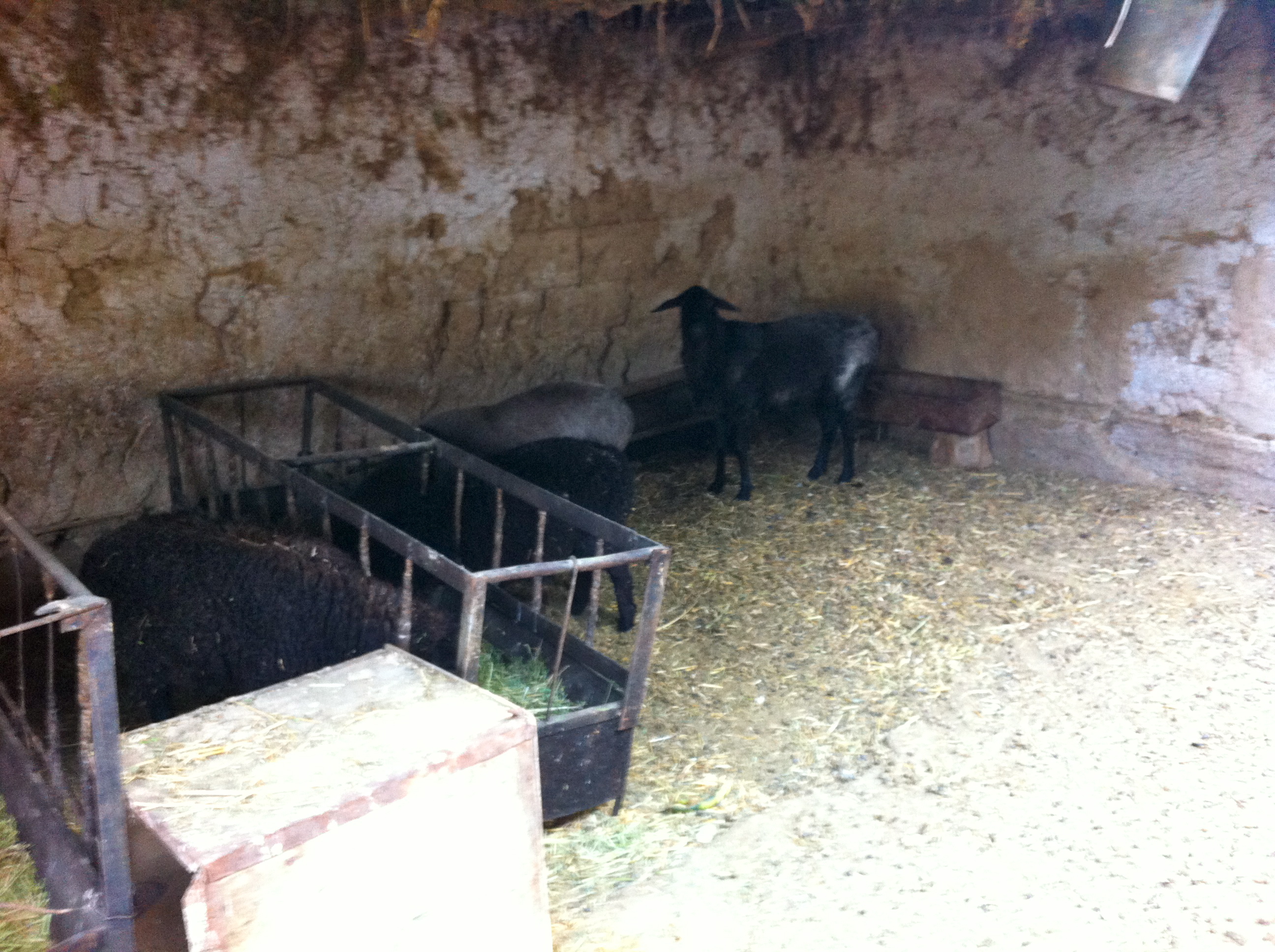
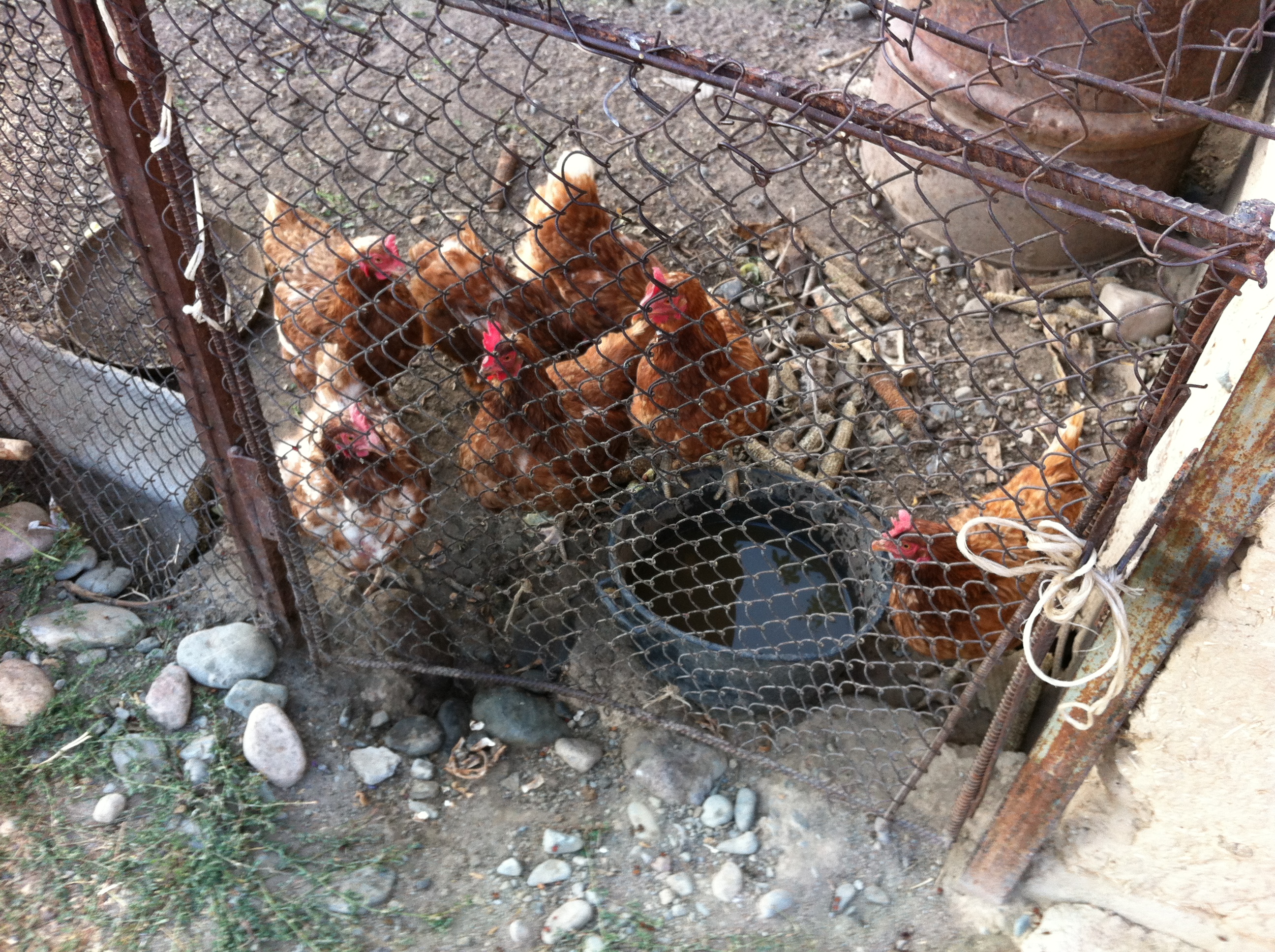
Through two years of living in villages I had never once been responsible for any animal—save chasing two wanderers from the flock back down a hilltop—and now that I’d come to the “big city center” the lives of four sheep and five chickens had been suddenly thrust into my hands.

Living here at the “Doctor’s house” with running water, a washing machine and 3G internet, I pictured a life of privilege, a life of ease. There was going to be none of this getting-my-hands-dirty stuff.

So it was I found myself, not two steps through our gate having returned from a mini-vacation on the golden shores of the mountain lake Issyk-Kul, wandering back to the sheep pen in my flip-flops.

My host dad, or Ata, was taking the family that afternoon for a week of wedding parties in the capital and it was going to be my task to look after the animals. He started immediately into the details—how many grams of jem a typical sheep ate per day, how full to fill the water trough, where the extra chicken feed was kept. I pulled out my notebook and started furiously writing so as not to mistakenly forget something and end up with a dead $100 bill on my hands.

We made our way over to the grass pile and a home-made grass chopping table. Operated with your right hand as you pushed the grass through with your left, it was essentially an enormous paper cutter where you could lop off your own hand before you realized what was happening. I took small condolence in the fact that I would be operating this thing at a groggy hour and made note to boil coffee before emerging into the morning air.

IMG_1146

“Do you know why I like you, Luther?”

The question came abruptly as I was chopping the grass.

“Huh?” I answered, wondering if I had heard the question right.

“Do you know why I like you?”

“Uh, no, why?” I stopped cutting.

“You’re like my son. You’re my uulum. You know I had a son—he was your age, born in 1983. He died though. And now you’ve come to our home.” I saw a single line of water fall from the corner of his eye.

I nodded somberly, trying to find the right words to say. They had told me the story before, during one of my first days here in June. It happened three years ago. Their son had become ill suddenly and the doctors didn’t know what to do. He had been flown to Moscow, but the respiratory illness had taken hold and nothing could be done. He left behind a wife and a daughter he would never meet—his wife was pregnant.

Now their daughter-in-law and grandchild live in Bishkek but they don’t get to see them often. Not having remarried, she spends most of her time with her parents.

“Do you think about him every day?” I asked stiltedly, hoping I had phrased it respectfully.

“Of course. Of course.”

I looked down and fidgeted with the chopping table.

“You’ve been tasked by God—taking care of these animals,” he said.

I tried to swallow the lump that was forming in my own throat and continued chopping.

After a moment he added, “And don’t chop your fingers off. We don’t need any of that.”

We moved on to the chicken coop and Ata pointed to where the chickens laid their eggs. There was a single one waiting to be placed—unwashed—in our refrigerator.

IMG_1037

My family took off later that afternoon and I had a quiet house to myself. In the evening I slid into my now muck covered flip-flops and trudged back out to the pen. The sheep sprinted in circles to clear away from this new force in their midst, vacillating wildly between distrust and the animal instinct of an empty belly.

Poking its head out into the light, a thickly brown sheep hobbled up to the feeding trough. I gasped in horror as I saw my God-given task’s leg dangling loosely from the knee. I immediately called my host mother—the only one to whom I felt I could break the news—and was told not to worry. It had been sick. I texted my brother thinking maybe she hadn’t understood my fervent Kyrgyz—butu syndy!—but he replied back that yes, the lamb’s leg had broken a few days before.

I felt awful. I didn’t know what the procedure was for a broken leg—was this what we did? Just leave it until it fell off? Or was the lamb to be the next sacrifice to our pantry? Could you even properly serve a sheep with a broken leg? And what about it’s own misery? And if not for the sheep’s sake, then maybe would the adrenaline surging through its muscles make it taste strange? These wonderings washed through me as I watched the pitiful thing struggle on its three legs.

“The world is broken,” I thought.

And I thought about God’s glory and the mystery of his sovereignty over all things. Of how his greatness shines forth in the handful of barley scattered on the ground, of chickens scratching the earth and eggs hidden among the grass. Of God’s knowledge of the broken leg and how much more he cares for his two-legged sheep, wandering upright on the earth. How we too are wayward and sprint erratically, choosing between his glory and our own.

Here I was, placed in responsibility over one, tiny little sliver of the world and I already felt the weight of it, pushing down between my shoulder blades, seeping into my heart, a heart still beating three years beyond my brother’s. I wondered if this is not a tiny bit of how God feels for his earth, his heart beating for the world, his own body broken for it, his blood spilled out over the same earth that we, his little creatures, tread.

Without difficulties, there’s no reason to live

“Makal” in the Kyrgyz language means “proverb.” Kyrgyz is full of wonderful and puzzling little proverbs – some that match common proverbs often heard in English and some that are real head scratchers. Most Mondays I’ll post one of the more fun ones for you. Let’s see if we can’t make some of these commonplace in America by the time I get back!

Жизнь без трудности проживать не стоит

Кыйынчылыксыз жашоону жашап кереги жок

Without difficulties, there’s no reason to live

In this version of Makal Monday, we find ourselves in the middle of a Russian idiomatic saying. Russian culture has had indelible influence on present day Kyrgyzstan, and many of the truisms uttered in Kyrgyz have their origin in the Russian language.

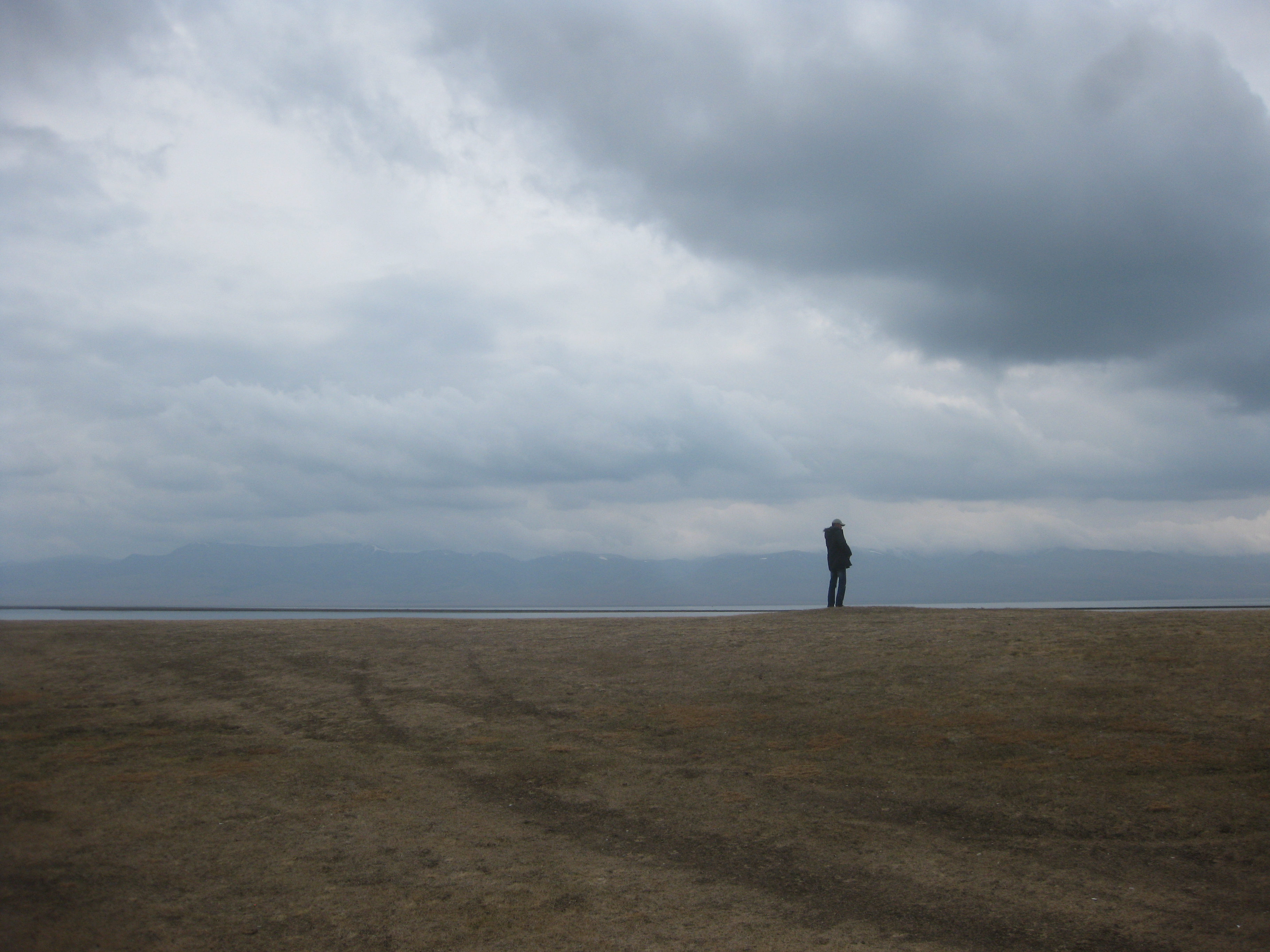
My friend Maksat is yet another king of the proverbial turn and can match almost any circumstance to an image rich phrase. After spending 4 days and 5 nights with him up by the mountain lake Song Kol selling our souvenir Chuko Bones, I too found myself waxing poetic.

Our sales trip didn’t turn out to be the raging success Maksat had hoped. Dreaming of being able to pay off his car with a few short days of selling out of a tent, our long stretches of waiting in between customers gave him plenty of opportunity to reflect on life and just what it means to be going through it. What does it mean to struggle? What is resiliency? What have I learned? What did my father used to say? Where is it all going?

IMG_9655Standing over it all

Maksat’s had his share of difficulties. He lost his father while an undergrad and had to quit school to come home and take care of his mother and household. Shortly after his brother-in-law passed away and so he took on the added stress of helping support his sister who had two children and a third on the way. Because of the cultural duties of the funeral, they had to slaughter many of their animals further adding financial stress. In honor of his father, who had been a math teacher, Maksat enrolled in a long-distance learning program to obtain his teaching certificate and step into his father’s old position. But a teacher’s pay is meager and so Maksat’s been diligently searching for other forms of income.

“The hardship is good in some ways,” Maksat says, “You’ve got something to fight against, a problem to solve, a reason to keep on living.”

Maksat is torn in so many directions—should he try to find work abroad? If yes, where? How much does he want to push against the grueling application processes? How about getting set up with some credit and a new herd of animals? After all, he had scratched out a year and a half long plan of buying and selling cows. Would it be worth it? Or he could go back to school to pursue a PhD in mathematics and work at a university. And what about this Chuko Bones company? Could he make a go of it? Start exporting? Expand into other products?

Maybe it’s his mathematical mind that causes him to search for the proof that life is good and life has meaning. Or maybe he’s just trying to find the most logical path through it all.

During our conversations I chided him a bit on a few of his kemchilikter, or shortcomings. Why didn’t he just choose a path? He had “too many irons in the fire” (he liked that one), was putting “all of his eggs in one basket” (that one not so much), and somehow simultaneously.

IMG_9642Keeping us alive through the protestations of our gasoline heater was certainly one of Maksat’s good traits
We talked about “knocking on doors” and seeing which would open. I told him that sometimes though you just have to put your shoulder to one and push until it gives.

Maybe it’s that I see myself in that place of decision. Here Maksat had an especially good thought: “When you have a difficult decision to make, it’s not the decision that’s problematic. It’s the problem. Your difficulties stem from the problem you’ve found yourself in and making a decision is the way out.” Yet for me, I’m choosing between so many good options rather than trying to figure out how to get out. I’m not sure if that’s supposed to make it easier or harder.

Maybe it’s that we’re blessed by our difficulties. That the lessons we learn by going through them and emerging on the other side enrich our lives in ways we never could have imagined. Maybe it’s the fight that cures us, refining us as in a fire. Maybe that’s the answer, that through it all we find our purpose.

IMG_9673

They’re in it to win it

And I’m not talking about Kyrgyzstan’s chances to play in the World Cup, though there has been some positive movement.

I was sitting across the table from three recent graduates of my new school. We were chatting about university entrance exams, and all three were set to interview at the American University of Central Asia (AUCA) in Bishkek. We practiced interviews and essay formats and went over a few grammar questions.

These girls were already at the top of their games. Each girl placed in the top five nationally in one of Russian Literature, Kyrgyz Language or English Language Olympiads. Now they were competing for spots in a year-long prep program for the most prestigious university in Kyrgyzstan and for scholarships for an education they couldn’t afford otherwise. AUCA is also the most expensive university in Kyrgyzstan.

IMG_0171High school seniors at graduation, ringing the bell for the last time

There are cheaper universities and colleges in Kyrgyzstan, but few offer a high standard of education. With low salaries for professors and lecturers, many feel the need to accept bribes to supplement their incomes. This leads to a drop in the quality of education as many students opt to simply pay for their diplomas instead of submitting homework and attending classes.

This is a big reason why diplomas from the vast majority of the 50-odd universities in Kyrgyzstan are not accepted by institutions abroad. This in of itself should be a wake up call to those in charge of higher education. Corruption must be dealt a heavy and widespread blow from top legislators and administrators if the education system is going to have a chance at providing their students with quality education. There are many more students who deserve to be accepted to the few top universities than will be. Many will have to settle for studying in environments that reward those who pay bribes and punish those who refuse.

Earlier this week a message popped up while I was on Facebook. It was one of the girls I had briefly tutored and she was just writing to say she’d “entered to the New Generation Akademy at AUCA !!!” (I’d have used a lot more exclamation points if it were me!) It was super exciting to hear that one of them had gotten in. It’s still no guarantee for her whole university education—the New Generation Academy is a fully funded extra year of prep for university, and then students need to figure out their own methods of paying tuition. But it’s a great first step and one that will give attending students a quality education and experience resultant to their effort.

These kids are more than pulling their weight on their end of the line. Kyrgyzstan—it’s time to step up and give your students the chances they deserve.

Dear students: It doesn’t matter

If I had a time machine I know the exact moment I would go back to—a breezy fall day in 1997 in the stairway of Ramsey Junior High School in Saint Paul, MN. There I would find the world’s worst perpetrator with a bowl-cut and a backpack. A young teenaged kid wearing—horrors!—a Nike sweatshirt with Adidas wind-pants.

I had unknowingly committed a mortal sin, just above blasphemy of the holy spirit I believe, by wearing two different name brands on the same day. I wished the devil would just take me right then and there to the fiery hell I deserved. It seemed better than the tortuous words coming from my fellow 8th grade classmates.

In that moment my 2014 self would walk over, lay a hand on my sagging shoulder and whisper: it doesn’t matter.

It doesn’t.

You might wonder why, with the entire age of the world at my fingertips to explore I would choose to enter this seemingly insubstantial moment in time. Here I was just a kid with a wardrobe choice. But it was more than that. They were the clothes that made me happy. Made me comfortable. Made me feel like…“me.”

In that moment of ridicule the value of my own personhood was being called into question and it made me immediately reel with self-doubt, shame and apprehension.

Every young person has these moments. It might not be the clothes on your back but instead your choice of college. Or what you want to study. Or even the moves you show on the dance floor.

How you choose to live—whether in the shadow of others’ approval or in the freeing light of your passions—affects everything else in your life.

Oh young people of the world! I’ve seen you stand at the crossroads of these choices, seen you labor over them, bleed over them, weep over them. Seen you allow others to stand in command over your decisions and actions and movements, seen you held in that tortuous position where you never know when the hammer is going to drop.

And drop it will. Others can be so cruel in response to your dreams, especially in those first steps. That time in your youth when you venture timidly out from the camp of conformity into uncharted forests with rescue ropes of gossamer still tied to the approval of others. When that frailty is oh so gently tested you suddenly find yourself cut loose, and tumbling, flailing out of the circle of approval, you trip out into the wild away from the warmly lit ring of acceptance.

In that moment, don’t turn back to the safe circle of dying embers. Dare instead to forge a new path.

IMG_7988

You’ve been conditioned through those agonizing years of adolescence to believe that each little shoe strap, every wisp of hair, each angle of your “duck” lips is going to be picked apart, stared at, and scrutinized. You’ve learned to take the safe route, to check your dreams, to process your decisions in the mill of conformity and approval.

And how could you not? It’s everywhere from red carpet walks to pop up cosmetic shops to scrolls of comments in Facebook newsfeeds. You’re told to choose your fashion with the eye of a trend-setter, to always check the reactions to your choices, to hover in a constant state of FOMO—the fear of missing out.

You stall in these moments because time only moves one direction and somehow the world has convinced you that the peak of all creation is now.

The trials and doubts and questions you find yourself in today are not the culmination of every past moment of your life. This moment is always a new beginning. An umpteenth chance. A fresh page to start writing a new story. This moment is always the start of everything else, and what follows is up to you.

Dear friends—there is so much beyond junior high. There is so much beyond high school. There is so much to life after university!

So many go through it thinking there must be a best plan, a single track to follow and if it gets derailed every future moment will be lived out in a second rate life, or worse.

Here’s the secret: There’s no plan A. There’s no best option. Life is not built upon first place finishes but on second chances. Life need not follow someone else’s perfect vision. It’s your eyes in your head, your head on your shoulders and your call as to which way they travel.

For it’s not the approval that matters and not the path, but your love for what you do and the passion by which you do it.

—-

What passions will you let break free? What makes you come alive?